
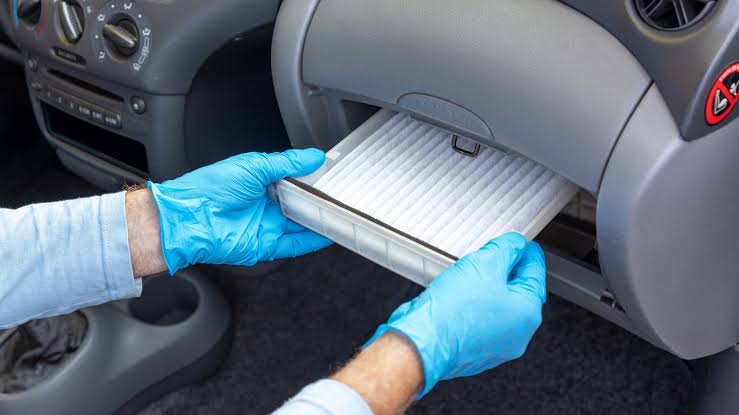
Knowing how to change cabin air filter at home is one of the most useful DIY car maintenance skills an Indian owner can learn. The cabin air filter sits inside the car ventilation system, cleaning the air that enters through the car air conditioning and HVAC system before it reaches the cabin. Dust, pollen and city pollution all accumulate here. When it clogs, airflow drops, the AC works harder and the cabin fills with odour.
This guide covers every step of how to change car cabin air filter at home, including how to identify when replacement is due, which filter type to buy and what the job costs with and without a mechanic. Replacing a cabin air filter requires no special tools, costs ₹300 to ₹1,500 for the part and takes under 20 minutes for most Indian cars.
What Is a Cabin Air Filter and Why It Matters
Understanding how to change cabin air filter correctly starts with knowing what the part does. The cabin air filter is positioned inside the car ventilation system between the outside air intake and the blower fan. Every breath of air entering through the car AC airflow path passes through it first.
In Indian driving conditions, the filter takes on particular importance. City roads generate fine particulate matter from construction, diesel exhaust and industrial emissions. Rural roads add dust and dry soil. Seasonal changes bring pollen in spring and crop-burning smoke in northern states through winter. A working filter traps all of this before it reaches passengers.
A clogged filter creates four problems: AC airflow weakens noticeably, the blower motor works harder, odours build up as bacteria and mould grow on accumulated debris, and allergy sufferers experience more symptoms.
Most manufacturers recommend replacing the cabin air filter every 15,000 to 20,000 km or once a year. In heavily polluted cities, every 10,000 km is the practical interval.
How to Know If the Cabin Air Filter Needs Replacing
Before learning how to change cabin air filter, buyers should know when it actually needs doing. Knowing how to know if cabin air filter needs replacing prevents both premature waste and running with a blocked filter too long. Four reliable signs:
Reduced AC airflow: Switch the fan to maximum. If the air from the vents feels weak, a blocked filter is usually the cause. A tissue held in front of a vent should flutter vigorously on full fan speed.
Musty smell when AC is on: A damp or dusty odour entering the cabin when the system switches on indicates bacteria or mould on a saturated filter. No freshener fixes this permanently.
Louder fan, less air: The blower motor strains against a clogged filter and sounds louder without a corresponding increase in output.
Dark or caked filter: Pull it out and check. A new filter is pale grey or white. A filter that is brown or black, or shows visible dust cakes and leaf fragments, needs replacing immediately.
What Type of Cabin Air Filter to Buy
Three types are available in India:
Particulate filters (standard): Pleated paper or synthetic fibre that traps dust and pollen above approximately 10 microns. Priced ₹300 to ₹600. Suitable for moderate-pollution areas and most everyday use.
Activated carbon filter: Adds a layer of activated carbon behind the particulate element that adsorbs gases, fumes and odours. Recommended for city commuters. Priced ₹600 to ₹1,200.
HEPA cabin filter: Captures particles down to 0.3 microns, including most bacteria and PM2.5. Most effective for allergy sufferers and high-pollution environments. Priced ₹800 to ₹1,500. Confirm compatibility before buying, as HEPA filters restrict airflow more than standard units.
The correct part number is in the owner’s manual or available by entering the car’s details on Carorbis, eBay Motors India or the manufacturer’s parts portal. For a broader understanding of cabin air filter types and their filtration ratings, Bosch India’s cabin filter guide explains the technical differences between standard, carbon and HEPA variants.
How to Change Cabin Air Filter Step by Step
This is how to change cabin air filter in car, covering the glove box method used in most popular Indian models including the Maruti Swift, Hyundai i20, Tata Nexon, Honda City and Kia Seltos. A small number of cars locate the filter under the dashboard instead; check the owner’s manual if the glove box does not reveal the air filter housing. No tools are required for most models.
Step 1: Switch the Car Off
Switch off the engine. The blower fan stops and no air draws through the system.
Step 2: Open and Drop the Glove Box
Empty the glove box. Open it fully. Squeeze the two plastic stoppers inward while pulling the box downward past its usual stopping point. It will hang open, exposing the filter housing behind it.
Step 3: Open the Filter Housing
The housing is a rectangular plastic box secured by a clip or sliding tab. Press the clip or slide the tab to release the cover.
Step 4: Remove the Old Filter
Slide the old filter out. Before removing it fully, note the filter airflow direction arrow printed on the frame. The arrow points toward the cabin side when correctly installed. Photograph the orientation.
Step 5: Clean the Housing
Wipe inside the housing with a dry cloth or vacuum with low suction. Do not use water.
Step 6: Fit the New Filter
Slide the new filter in with the arrow pointing toward the cabin, matching the orientation noted in Step 4. The filter must sit flush against all four sides. A poor fit allows unfiltered air to bypass the filter entirely.
Step 7: Reassemble
Clip the housing cover back. Lift the glove box and press the stoppers into their slots to re-engage.
Step 8: Test
Start the car and run the AC on maximum fan. Airflow should be noticeably stronger than before the replacement if the old filter was clogged.
How Often Should You Change Cabin Air Filter
How often should you change cabin air filter depends more on driving environment than distance alone.
Standard manufacturer interval: 15,000 to 20,000 km or 12 months. Applies to moderate-pollution conditions.
Indian city driving: Every 10,000 km or 6 to 8 months. Delhi, Mumbai, Bengaluru and Hyderabad regularly see AQI above 150 in winter months. A filter saturates in half the time compared to smaller towns.
Highway-dominant drivers: The full manufacturer interval of 15,000 to 20,000 km applies. Highway air carries less industrial pollution, though construction zones add dust.
Coastal cities: Replace annually regardless of distance to prevent mould from humidity and moisture accumulation.
Allergy or respiratory conditions: Every 8,000 to 10,000 km regardless of location. Upgrade to an activated carbon or HEPA filter for maximum protection.
Cabin Air Filter Replacement Cost: DIY vs Workshop
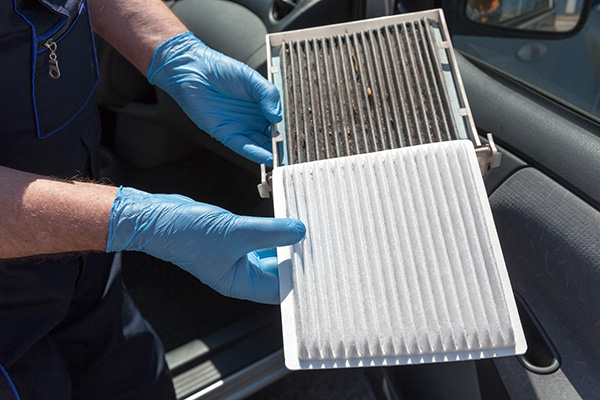
DIY cost when you know how to change cabin air filter yourself: The filter is the only expense. Particulate filters for common Indian models (Maruti, Hyundai, Tata, Honda): ₹300 to ₹600. Activated carbon filters: ₹600 to ₹1,200. HEPA cabin filter: ₹800 to ₹1,500.
Workshop cost: Labour for a cabin air filter replacement runs ₹100 to ₹300 at most multi-brand workshops. Authorised dealers often include it in a service visit at no separate labour charge. The filter cost is additional in both cases.
OEM vs aftermarket: Authorised dealer filters are guaranteed compatible. Aftermarket filters from established brands (Bosch, Mann+Hummel, Purolator, Maruti Genuine Parts) are reliable. Avoid unbranded filters in unmarked packaging.
Cabin Air Filter Types: Quick Comparison
| Feature | Particulate | Activated Carbon | HEPA Cabin Filter |
|---|---|---|---|
| Price (India) | ₹300-600 | ₹600-1,200 | ₹800-1,500 |
| Dust and pollen | Good | Good | Excellent |
| Odour and gas removal | None | Excellent | Good |
| PM2.5 capture | Limited | Moderate | Excellent |
| Best for | Highways, low pollution | City commuters | Allergy sufferers |
For a full car maintenance checklist covering all service items, the cabin filter sits alongside the fuel and engine air filters as a part frequently missed between service visits. The car fuel efficiency tips guide covers related adjustments that improve AC efficiency alongside filter condition.
Tips for Better Cabin Filter Maintenance After You Change It
Anyone who has learned how to change cabin air filter at home should follow these tips to maximise the benefit.
Never knock or tap the old filter to reuse it. Tapping releases trapped particles back into the housing. Always replace.
Match the filter type to the environment. An activated carbon filter in a car driven daily through congested city traffic is worth the extra ₹300 to ₹600. A standard particulate filter is sufficient for rural and highway-dominant use.
Always check the airflow direction arrow. Installing a filter backwards restricts airflow and strains the blower motor. The arrow points toward the cabin side of the housing.
Keep one spare filter. Store an extra in the boot so the next replacement is ready when due.
Set a phone reminder. Six months or 10,000 km from the replacement date, whichever comes first in your city.
EV owners: check for a secondary filter. Electric vehicles like the Tata Nexon EV may have an additional filter serving the battery cooling circuit. This is separate from the cabin filter and follows a different schedule. Confirm with the EV owner’s manual.
Frequently Asked Questions
How to change cabin air filter in car without a mechanic?
How to change cabin air filter in car is a 10 to 20 minute home task for most Indian models. Drop the glove box by squeezing the side stoppers, open the filter housing behind it, slide the old filter out and fit a new one with the airflow arrow pointing toward the cabin. No tools required for most cars.
How often should you change cabin air filter in India?
In Indian city conditions, replace the cabin filter every 10,000 km or every 6 to 8 months, whichever comes first. For highway-dominant drivers in lower-pollution areas, the manufacturer’s standard interval of 15,000 to 20,000 km applies.
How to replace cabin air filter yourself without any tools?
To replace cabin air filter yourself in most Indian cars, no tools are needed. Drop the glove box, unclip the housing cover, pull the old filter out, clean the housing with a dry cloth and slide the new filter in with the arrow pointing cabin-side. The whole job takes under 20 minutes.
What is the cabin air filter replacement cost in India?
A standard particulate filter costs ₹300 to ₹600. An activated carbon filter costs ₹600 to ₹1,200. A HEPA cabin filter costs ₹800 to ₹1,500. Workshop labour for fitting adds ₹100 to ₹300 at most service centres.
How to know if cabin air filter needs replacing before the scheduled service?
Replace early if AC airflow is weak on maximum fan speed, the cabin smells musty when the AC starts, the blower fan sounds loud without proportional airflow, or the filter is dark brown or black when inspected.
Fifteen Minutes, One Filter, Cleaner Air for Every Journey
Learning how to change cabin air filter at home is one of the highest-value DIY maintenance tasks for any Indian car owner. The part costs ₹300 to ₹1,500, no tools are needed for most cars and the job takes under 20 minutes. The result is immediate: noticeably stronger AC airflow, no musty smell and significantly cleaner air for every passenger in high-pollution conditions.
Replace it every 10,000 km in cities and every 15,000 to 20,000 km in cleaner environments. Upgrade to an activated carbon or HEPA cabin filter for city commuting. The whole task is simpler than most owners expect, and there is no practical reason to pay a workshop for something that takes less time to do at home than a trip to the mechanic.