A car maintenance checklist only works if it matches how the car actually gets driven, and most owners get this wrong from day one. They follow the “normal” schedule printed in the manual, when their real driving — heavy traffic, dusty roads, short city trips — actually calls for the shorter “severe” schedule most owners never even check exists. That single gap explains more premature repairs than almost any other maintenance mistake.
This guide covers a general car maintenance checklist, a breakdown by mileage, what really happens at a service visit, AC and wash-specific care, a normal-vs-severe comparison table, and city-specific adjustments for Indian conditions. Anyone building genuine car maintenance tips into a routine will find the real intervals below, not a vague “service regularly” gesture.
Most Owners Are Using the Wrong Schedule Without Realising It
Manufacturers publish two schedules, not one. There’s the “normal” schedule most owners default to, and a “severe” or “special conditions” schedule with meaningfully shorter intervals, intended for heavy traffic, dusty roads, monsoon exposure, or frequent short trips under 10km.
Most Indian city driving actually fits the severe category more accurately than the normal one, yet most service recommendations owners follow come from the schedule that assumes cleaner, steadier, longer-distance driving. Checking car service intervals against the correct schedule — not just the default one printed first in the manual — is the single biggest fix most owners are missing.
General Car Maintenance Checklist — The Items That Matter Most
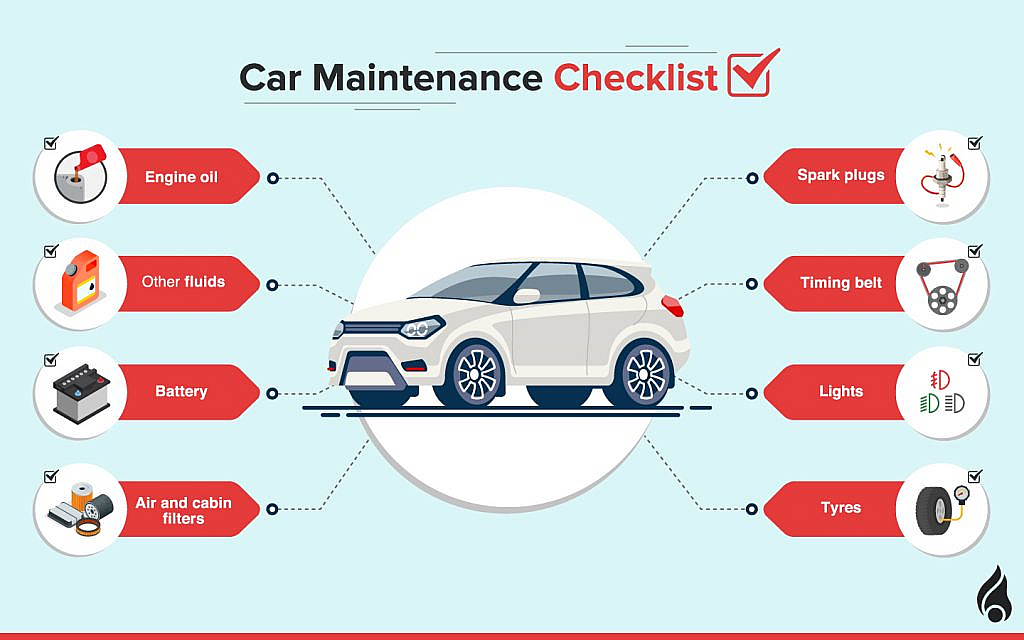
A general car maintenance checklist starts with a handful of genuinely non-negotiable items. Oil and filter changes fall every 5,000 to 10,000km depending on the manufacturer and oil type. Tyre rotation follows a similar 5,000 to 10,000km rhythm. Brake pads should be inspected every 10,000km, though actual replacement typically falls somewhere between 32,000 and 80,000km depending on driving style and how much stop-start traffic the car sees.
Air filters need replacement roughly every 10,000 to 15,000km, though dustier conditions can push that closer to every 8,000-10,000km in practice. Spark plugs get their gap checked every 10,000km, with full replacement around 60,000km for conventional plugs, though iridium plugs on newer cars can run considerably longer before needing attention.
The Two Fluids Most Owners Forget
Brake and clutch fluid get inspected every 10,000km and should be replaced roughly every 2 years regardless of how little the car has been driven. Coolant follows a similar pattern — commonly every 2 years or 40,000-60,000km per the owner’s manual, whichever comes first.
Both of these are time-based as much as mileage-based, which is exactly why they get missed by owners tracking odometer readings alone. A car that’s covered only 15,000km in two years still needs its brake fluid changed on the calendar trigger, not the distance one.
Car Maintenance Checklist by Mileage — What’s Due, and When
Organising a car maintenance checklist by mileage makes it easier to find where a specific car actually sits rather than reading one long, undifferentiated list. The roughly-every-10,000km band covers oil, filters, tyre rotation, and brake inspection.
The 40,000-60,000km band brings coolant replacement and, on many cars, a first serious look at brake pad wear. Some of these items — wiper blades every 6-12 months, battery checks, brake fluid every 2 years — belong on an annual car maintenance checklist as much as a mileage-based one, since they’re driven by time and material degradation rather than distance covered.
The 60,000-100,000km band is where the timing belt becomes relevant on cars that use a belt rather than a chain. This one deserves real emphasis: a snapped timing belt can cause serious engine damage on interference engines, and it’s exactly the kind of item that gets silently skipped because nothing feels wrong until it fails.
What Actually Happens at a Car Service — And What Doesn’t
A car service maintenance checklist at most workshops covers oil and filter change, a multi-point inspection, fluid top-ups, tyre inspection, a brake check, and cabin filter replacement on major services specifically. This car service checklist doesn’t cover the same ground on every visit, and that distinction matters more than most owners realise.
A minor service and a major service are genuinely different in scope, not just in price. Booking a minor service and expecting major-service coverage is a common, avoidable disappointment. Anyone unsure which one they’ve booked should ask directly for the car service list covering that specific visit, rather than assume every routine car check up covers the same ground by default.
Car AC Maintenance Checklist — Why It’s the Most Neglected Item
A car ac maintenance checklist centres on one component most owners never think about: the cabin filter. It should be checked at every service, and a musty smell or noticeably reduced cooling usually traces back to a neglected filter rather than a major refrigerant fault.
Gas top-up isn’t a fixed-interval item the way oil changes are — it’s needed as the system loses pressure over time, which varies car to car. Treating AC performance as a routine check rather than an emergency-only concern catches most problems before they become expensive.
Car Wash Maintenance Checklist — More Than Just Looking Clean
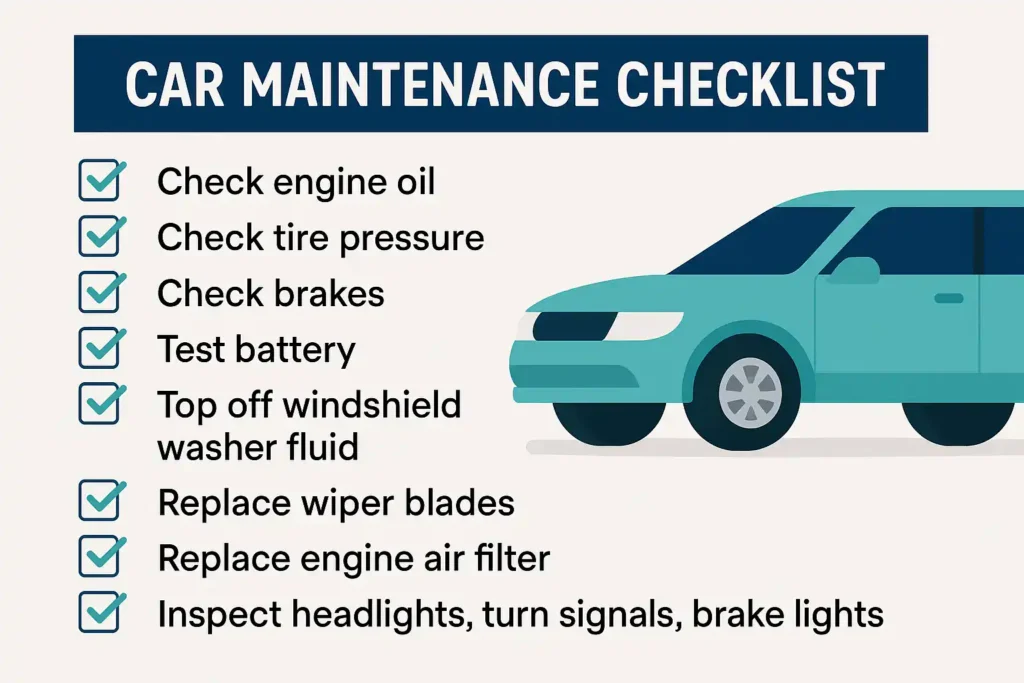
A car wash maintenance checklist is easy to dismiss as cosmetic, but regular washing genuinely protects the car. Removing accumulated road salt and grime slows underbody corrosion meaningfully, especially in coastal or monsoon-heavy regions. Wheel wells and door drain channels deserve a specific check too, since blockages there can trap moisture against the body rather than letting it drain away.
Treating washing as preventive maintenance rather than pure appearance care changes how often it actually happens — most owners wash far less frequently once they stop thinking of it as optional grooming.
Normal Schedule vs Severe Schedule — Comparison Table
The clearest way to see the gap between these two schedules is side by side. This is where car preventive maintenance checklist thinking actually pays off — the severe schedule isn’t paranoid overkill, it’s the more accurate match for how most Indian cars are actually driven.
| Maintenance Item | Normal Schedule | Severe/Indian-City Schedule |
|---|---|---|
| Oil & Filter Change | Every 10,000km | Every 5,000-7,000km |
| Tyre Rotation | Every 10,000km | Every 5,000-8,000km |
| Brake Pad Inspection | Every 10,000km | Every service (every visit) |
| Air Filter | Every 15,000km | Every 8,000-10,000km |
| Battery Terminal Check | Every major service | Every service (coastal cities especially) |
Note: these are general, commonly-cited ranges rather than figures tied to one specific manufacturer — cross-check against the owner’s manual for any specific car, since actual published intervals vary by brand and engine type.
Perfect car care doesn’t mean following either schedule blindly — it means checking which one actually describes the car’s real driving pattern before defaulting to whichever one appears first in the manual.
Making This Checklist Actually Stick
- Check the owner’s manual specifically for the “severe” or “special conditions” schedule, since most owners never realise it exists separately from the standard one
- Keep a simple written log — date, odometer reading, service type, cost — rather than relying on memory or a single stamped service book
- If driving in Mumbai or another monsoon-heavy city, get brakes inspected at every service visit, not just major ones, given how much faster corrosion sets in
- If driving mostly in heavy stop-go traffic, Bengaluru-style, shift the whole schedule roughly 500-1,000km earlier than the manual states
- For cars past 5-6 years or 70,000km, shorten every interval by roughly 20-25% rather than assuming the original schedule still applies
- Don’t treat “the car feels fine” as proof service can wait — engine wear from degraded oil and accumulating deposits happens silently before it becomes noticeable
Chennai’s coastal air accelerates battery terminal and body corrosion specifically, which is why terminal cleaning deserves a spot at every visit there rather than just major services. Pune’s more mixed urban-and-highway driving pattern tracks closer to the standard schedule without much adjustment needed, which makes it something of an exception among major Indian cities rather than the rule.
Frequently Asked Questions
1. What should be on a basic car maintenance checklist?
The core non-negotiables: oil and filter changes, tyre rotation, brake inspection, air filter replacement, and fluid checks covering brake, clutch, and coolant.
2. How often should I follow a car maintenance checklist by mileage?
Most routine items follow a roughly 10,000km rhythm, while major fluid changes and belt items are spaced further out, typically between 40,000 and 100,000km.
3. What’s included in a typical car service maintenance checklist?
It depends on minor versus major service. A minor service usually covers oil, filter, and visual checks; a major service adds spark plugs, air filter, cabin filter, and a fuller fluid and brake inspection.
4. Do I need a different maintenance checklist for AC and wash care?
Yes. AC care centres on the cabin filter and gas levels rather than a fixed interval, while washing protects against corrosion and isn’t purely cosmetic.
5. Should I follow the normal or severe car maintenance schedule?
For most Indian city driving — heavy traffic, dust, monsoon exposure, frequent short trips — the severe schedule is the more accurate fit, even though most owners default to the normal one without checking.
The Real Point of This Checklist
A car maintenance checklist only works if it actually matches how the car gets driven, not the schedule that happens to print first in the manual. Most owners default to the normal schedule and end up understating real wear from Indian traffic, dust, and monsoon exposure, then treat the resulting problems as unexpected rather than predictable.
Anyone serious about this should check the owner’s manual for the severe-conditions schedule specifically, and adjust the very next service booking accordingly rather than waiting for a problem to show up first.
For further reading, owners can check Maruti Suzuki’s official service and maintenance page and general vehicle upkeep guidance from Autocar India’s ownership section for brand-specific intervals. Readers preparing a car specifically for the rainy season can also check our related guide on Monsoon Car Care Tips: The Best Pre-Monsoon Checklist for Indian Roads.