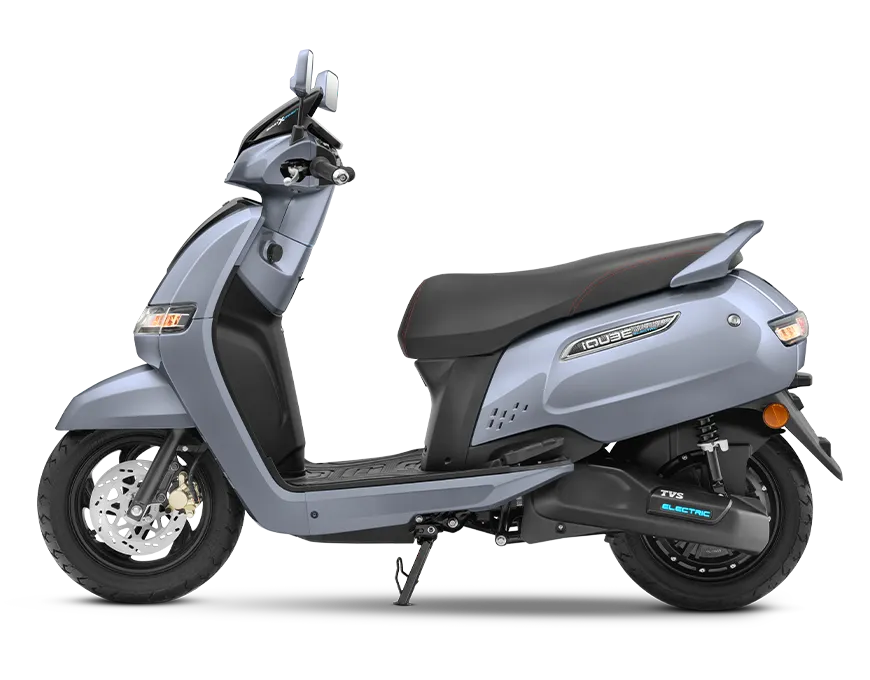
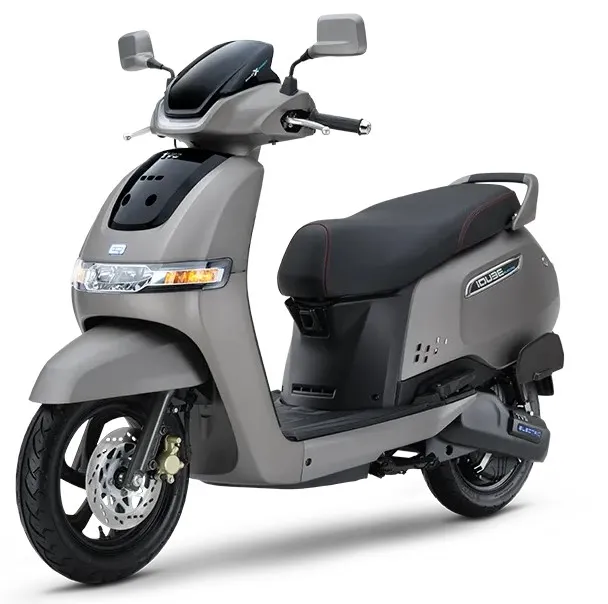
On June 25, 2026, TVS Motor rolled the 10-lakh unit of the TVS iQube off its Hosur production line — the fastest Indian EV scooter to reach 1 million units. The tvs iqube electric scooter got here by solving three real problems: range anxiety, patchy service coverage, and prohibitive upfront costs. This article covers every variant’s tvs electric scooter price, on road costs, honest real-world range figures, all colour options, and a direct comparison with the Ather Rizta S and Bajaj Chetak.
How TVS iQube Became India’s Number-One EV Scooter
TVS Motor did not pivot overnight from the conventional tvs scooty family to EV dominance. Crossing the first 1 lakh cumulative units took more than three years. The next 5 lakh arrived in 16 months. The most recent 1 lakh — from unit 9,00,001 to 10,00,000 — sold in 75 days between March 28 and June 10, 2026, averaging 1,333 units per day.
In May 2026, TVS reported 42,192 units sold — a 52.64% YoY jump. That positions it as India’s top-selling tvs ev scooter, with the gap to second place widening each month.
Two decisions drove this growth. The BaaS (Battery-as-a-Service) scheme lets buyers own the scooter at ₹59,999 and subscribe to the battery at ₹839/month — no competitor has matched this entry point. Second, TVS operates 3,300+ touchpoints across 3,000+ cities. EV startups with 60-city coverage can’t compete on service access.
The tvs scooty new model progression matters here: iQube now serves as TVS Motor’s EV spearhead for urban families, with far lower running costs.
TVS iQube Price 2026 — Five Variants, One Clear Winner
The tvs iqube electric on road price varies by variant and state. Ex-showroom prices run from ₹1.11 lakh to ₹1.62 lakh (post-July 30, 2026 revision). On-road cost adds RTO registration at 8–9%, insurance between ₹3,000 and ₹5,000, and TCS at 1% — a total gap of roughly ₹13,000–16,000 over the ex-showroom figure depending on the state.
All Five Variants at a Glance
| Variant | Battery | Ex-Showroom | Est. On-Road (Delhi) | IDC Range |
|---|---|---|---|---|
| iQube 2.2 kWh | 2.2 kWh | ~₹1.11L | ~₹1.24L | 94 km |
| iQube 3.1 kWh | 3.1 kWh | ~₹1.19L | ~₹1.32L | 121 km |
| iQube 3.5 kWh | 3.5 kWh | ~₹1.27L | ~₹1.40L | ~140 km |
| iQube S 4.7 kWh | 4.7 kWh | ~₹1.46L | ~₹1.62L | 175 km |
| iQube ST 5.3 kWh | 5.3 kWh | ~₹1.62L | ~₹1.78L | 212 km |
Prices as of August 2026 — verify on-road price at the nearest TVS dealership.
The tvs iqube top model price is ₹1.62 lakh ex-showroom for the ST. That’s fair for what it delivers. But the 3.5 kWh at ~₹1.27 lakh is the smarter pick for most buyers — real-world 100–110 km range covers two to three days of typical city riding per charge, without paying the ST’s premium. The 2.2 kWh base is the variant to avoid unless the daily commute stays under 40 km. The range margin is too thin for anything else.
The Real-World Range: Honest Estimates for Every Variant
IDC (Indian Driving Cycle) figures come from controlled lab conditions. Real-world riding cuts those numbers by 15–25%. For the tvs iqube range across variants, practical estimates are:
- 2.2 kWh: ~70–80 km real-world
- iQube S 4.7 kWh: ~130–145 km real-world
- iQube ST 5.3 kWh: ~160–175 km real-world
The i qube’s three riding modes — Eco, City, Power — shift the range-performance balance noticeably. Eco mode adds roughly 15–20% range versus City mode at equivalent distances. Speeds above 60 kmph and heavier riders (above 90 kg) drain the battery significantly faster than the IDC cycle assumes.
Charging: standard charger takes approximately 4–4.5 hours for a complete cycle. The SmartFast charger — bundled with the S and ST, sold separately for lower variants — completes 0–80% in roughly 1.5 hours.
The ST’s 160–175 km real-world ceiling changes practical ownership. A Mumbai or Delhi commuter covering 50 km daily charges the ST every three to four days. That is a meaningful shift from any scooter requiring a daily plug-in.
Features Worth Paying For (and One That Isn’t)
SmartXonnect is the iQube’s standout differentiator. The connected app delivers turn-by-turn navigation, call and SMS alerts on the cluster, ride analytics, battery health data, and OTA software updates. Most rivals at this price point don’t offer OTA — a capability that lets TVS push improvements without a workshop visit.
The TFT display arrives on the S and ST; the lower three variants use an LCD that loses sunlight readability. Hill Hold prevents rollback on inclines — daily-use essential in Pune or Hyderabad. Q-Park Assist adds reverse creep for tight parking spots.
Boot space: 22 litres under-seat. Half-face helmet fits; full-face is a squeeze. Several rivals handle this better at similar prices.
One gap worth flagging: the SmartFast charger is not bundled with the 2.2, 3.1, or 3.5 kWh variants. Buyers expecting fast charging need to purchase it separately — budget for this before finalising the variant.
All Colour Options Available in 2026
The standard iQube (2.2, 3.1, and 3.5 kWh) offers five tvs iqube colours: Pearl White, Titanium Grey, Copper Brown Beige, Starlight Blue Beige, and Walnut Brown. It is a family-oriented, practical palette — nothing experimental, nothing likely to feel dated in three years.
The iQube S moves into more expressive territory with three options: Harlequine Blue-Beige, Titanium Grey Matte, and Magnificence Purple Beige. The matte grey and the purple-beige sit well on the S’s sharper body design. Colour availability differs by city and dealership stock — what is available in Bengaluru may not be in Jaipur. For iQube ST colour options specifically, confirm at tvsmotor.com or the local showroom, as regional allocations often differ from press materials.
The broader tvs scooty range historically carried regional colour allocation quirks, and the iQube follows the same pattern.
Suggested image: After this section — alt text: iqube colours 2026 all variants pearl white titanium grey
iQube vs Ather Rizta S vs Bajaj Chetak — Which One Actually Wins?
These three represent different ownership philosophies. The Chetak prioritises steel body build and entry pricing. The Ather Rizta S targets performance-focused urban riders who want sharper acceleration. The tvs iqube electric scooter targets high-mileage commuters who need deep range and wide service access. Choosing between them is a use-case question, not a spec-sheet exercise.
Comparison Table — iQube vs Rivals
| iQube ST | Ather Rizta S | Bajaj Chetak | |
|---|---|---|---|
| Ex-Showroom | ₹1.62L | ₹1.21L | ₹96,400 |
| Battery | 5.3 kWh | ~3.7 kWh | 3.0 kWh |
| IDC Range | 212 km | ~160 km | ~126 km |
| Real-World Range | ~165 km | ~125 km | ~100 km |
| Top Speed | 82 kmph | 90 kmph | 73 kmph |
| Charging (0–80%) | ~1.5 hrs | ~1 hr | ~2.5 hrs |
| Body | Plastic | Plastic | Steel |
| OTA Updates | Yes | Yes | Yes |
| BaaS Option | Yes (₹839/mo) | No | No |
| Best For | High-mileage commuters | Performance riders | Build-quality seekers |
For back-to-back test data, Autocar India’s four-way EV scooter comparison is the benchmark to read alongside this guide.
Chetak wins on steel body build and entry price — ₹14,600 cheaper than the base iQube. Ather wins on acceleration at 90 kmph versus the iQube ST’s 82 kmph. For commutes above 60 km daily, the iQube ST’s range leaves both rivals behind. Under 40 km daily, the value case shifts to the Chetak. Check the full Chetak Electric Scooter Price before making that call.
Seven Tips for Getting More Range and Battery Life
Run Eco mode on flat roads. Eco on straight urban routes adds 15–20% range with minimal speed compromise at city speeds.
Stop charging at 80% daily. Topping to 100% every day accelerates lithium cell degradation. Reserve full charges for long-distance days.
Activate Hill Hold manually each time. The system does not auto-engage — riders on hilly routes regularly miss this and blame the scooter for rollback.
Set up SmartXonnect before the first ride. Pairing and navigation setup takes 10–15 minutes. A dealership car park is not the place to do it.
Check tyre pressure weekly. Under-inflated tyres cut real-world range by 8–12% — the motor continuously works against added rolling resistance.
Run the BaaS maths before buying. At ₹839/month, BaaS costs ₹10,068/year. Owners keeping the scooter under three years usually benefit from BaaS; six-plus-year owners are better off owning the battery outright.
Service at 6,000 km or 6 months. EV servicing costs less than petrol equivalents, but missing the interval voids the battery warranty.
Frequently Asked Questions
What is the on road price of TVS iQube in 2026?
Ex-showroom pricing runs from ₹1.11 lakh to ₹1.62 lakh (post-July 30, 2026 revision). On-road cost adds RTO registration at 8–9%, insurance between ₹3,000 and ₹5,000, and TCS at 1%. In Delhi, the estimated on-road range is ₹1.24 lakh to ₹1.78 lakh. City-specific figures vary — confirm at the nearest TVS dealership.
Which iQube variant has the best range?
The iQube ST 5.3 kWh claims 212 km IDC and delivers roughly 160–175 km real-world — the clear range winner. The iQube S 4.7 kWh hits 130–145 km real-world at ₹16,000 less. For commuters covering 50–70 km daily, the S is usually the smarter buy.
What colours does the iQube come in?
Standard iQube (2.2–3.5 kWh): Pearl White, Titanium Grey, Copper Brown Beige, Starlight Blue Beige, and Walnut Brown. iQube S: Harlequine Blue-Beige, Titanium Grey Matte, and Magnificence Purple Beige. Verify availability at the local dealership before ordering.
Is iQube better than Bajaj Chetak?
The iQube leads on range, connected features, and network width. The Chetak leads on steel body build and entry price — ₹14,600 cheaper than the base iQube. High-mileage commuters belong on the iQube; sub-40 km daily riders who value build quality should look at the Chetak.
How long does the iQube take to charge fully?
Standard charger: approximately 4–4.5 hours (varies by pack size). SmartFast charger: 0–80% in roughly 1.5 hours, bundled with S and ST. Buyers of the 2.2–3.5 kWh variants need the SmartFast charger as a separate purchase.
Final Verdict — Should You Buy the TVS iQube?
One million units is not a marketing claim — it is aggregate purchase decisions by a million Indian commuters who compared the options and picked the TVS iQube. The reason is not one killer feature. It is five battery sizes covering every real-world commute from 70 km to 175 km, a BaaS scheme bringing entry cost below ₹60,000 for the scooter body, and a 3,300-touchpoint network reaching cities where rivals haven’t opened a single outlet.
The ideal buyer replaces a conventional tvs scooty, covers 40–80 km daily, and wants no compromise on after-sales support or connected tech. Ather buyers prioritising peak acceleration and Chetak buyers wanting steel build below ₹1 lakh are shopping in adjacent categories, not competing ones.
The 3.5 kWh at approximately ₹1.27 lakh ex-showroom is the variant to test ride first. For a broader view of the segment, Electric Two-Wheeler Reviews covers every major option worth considering.
Real gaps remain: a 22-litre boot that won’t fit a full-face helmet daily, fast charging absent from base variants, and BaaS economics that only suit certain buyer profiles. None of those change the verdict — it is the most complete electric scooter package under ₹2 lakh in India right now.