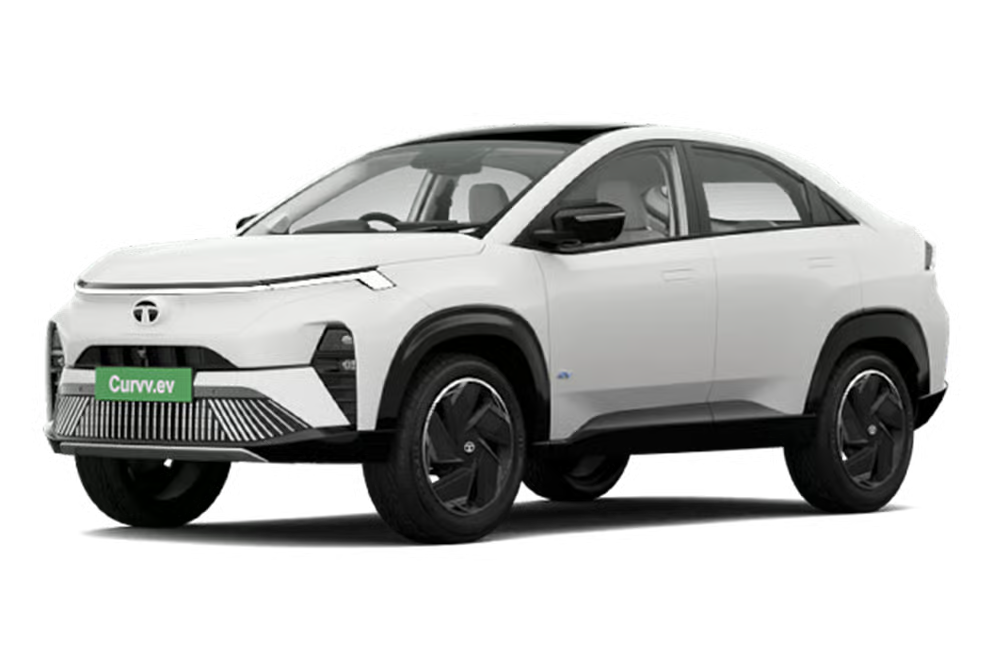
The Tata Curvv EV mileage story starts with two numbers: 502 km and 365 km. The first is the ARAI-certified claim. The second is what Autocar India recorded in a standardised real-world test with air conditioning running and a single occupant. The 27-percent gap between these figures is not a flaw specific to the Curvv EV. It is a characteristic of how India’s MIDC certification cycle works, and buyers who plan their ownership around the 502 km number will consistently fall short of it. Buyers who plan around 365 km will not.
This article covers every confirmed mileage and efficiency figure for the 55kWh Curvv EV (the only battery option since May 2026), the city-versus-highway breakdown, how the three drive modes affect range, what the 6.64 km/kWh combined efficiency means in daily running costs and how the Curvv EV compares to its rivals on actual usable range.
Tata Curvv EV Mileage: ARAI vs Real-World Range
The Tata Curvv EV mileage per charge depends entirely on which figure is being discussed. Three official or independently verified numbers exist for the 55kWh variant.
502km MIDC range certified: 502 km. This is the government-approved number used in all marketing material. The MIDC cycle uses low average speeds, ideal ambient temperatures and no air conditioning load. It does not represent Indian driving conditions.
Tata C75 real-world claim: 400-425 km. Tata Motors uses its own C75 methodology, which applies more realistic speed and load assumptions than MIDC. This figure is closer to what careful drivers in favourable conditions will see.
Autocar India tested range: 365 km. This is the most practically useful figure, recorded in Eco drive mode with AC running, a single occupant and standardised city and highway routes. The Tata Curvv EV real-world range test by Autocar India recorded a combined efficiency of 6.64 km/kWh: 6.75 km/kWh in the city and 6.52 km/kWh on the highway.
The 45kWh battery option was discontinued in May 2026. All current Curvv EV variants use the 55kWh battery (55kWh LFP, Lithium Iron Phosphate chemistry). Buyers looking at older reviews citing 430 km ARAI or separate 45kWh data should disregard those figures for current purchase decisions.
The gap between ARAI and real-world is not dishonesty. It is a structural consequence of laboratory certification. Every electric vehicle range figure in India carries this gap, typically 20-30 percent. The Curvv EV’s 27 percent gap is within the normal range for electric SUVs tested under Indian conditions.
Tata Curvv EV City Mileage: What Daily Commuters See
The Tata Curvv EV city mileage, tested by Autocar India, is 6.75 km/kWh, the best of the two conditions measured. This is counterintuitive to buyers coming from petrol cars, where highway driving typically gives better fuel efficiency than city driving. In electric vehicles, the relationship reverses.
The reason is regenerative braking. Every time the Curvv EV decelerates or brakes at a city intersection, the motor switches to generator mode and converts kinetic energy back into stored electrical energy. The four-level regen system, with Level 2 (medium) as the default in Eco mode for city use, means meaningful energy is recovered at every traffic signal, speed breaker and turn.
City driving range from the 55kWh battery: Using the 90 percent usable capacity rule (approximately 49.5 kWh from a 55 kWh pack), city efficiency of 6.75 km/kWh yields approximately 334 km of pure city range. Against a daily commute of 40 km, this represents more than eight days of driving on a single full charge.
For buyers considering the Curvv EV for urban daily use (office commutes, school runs, weekend errands), the Tata Curvv EV real world mileage in city conditions is strong enough to require charging just once or twice a week for most users. Even at 60 km daily, the usable range covers five days before needing a top-up.
The Eco driving mode, which restricts torque to 70 percent of total output and caps maximum speed at 120 kmph, is the recommended setting for city driving. Paired with Level 2 regen, it extracts maximum range per charge from the LFP battery without significantly compromising the driving experience in urban conditions.
Tata Curvv EV Highway Range: What Road Trippers Should Know
Highway driving range: The Tata Curvv EV highway range, as tested by Autocar India, is 6.52 km/kWh, marginally lower than the city figure. A preliminary highway test at mixed highway speeds recorded 6.54 km/kWh, translating to approximately 359 km on a full charge.
Why is highway efficiency lower? At sustained highway speeds, regenerative braking has very little opportunity to recover energy. The car maintains constant velocity without frequent deceleration, making the raw battery-to-motor-to-road efficiency the only factor.
Practical highway range planning: Using 49.5 kWh of usable capacity at 6.52 km/kWh:
Delhi to Agra (230 km): comfortable in a single charge, with approximately 130 km remaining. Delhi to Jaipur (270 km): achievable in Eco mode, leaving a buffer of 80-90 km. Mumbai to Pune (148 km): very comfortable, less than half the usable charge. Bengaluru to Mysuru (145 km): similarly comfortable.
Routes that require a charge stop: Delhi to Chandigarh (260 km) is possible but leaves minimal buffer. Delhi to Dehradun (305 km) or Mumbai to Nashik (165 km) plus further travel will need a charging break. The Tata Curvv EV range per charge on long trips benefits from DC fast charging stops. At a 70kW DC fast charging station, 10 to 80 percent takes 40 minutes, a practical lunch or coffee break on a long drive.
At speeds above 100 kmph or in Sport drive mode, the Tata Curvv EV highway range drops toward 280-300 km as aerodynamic drag increases relative to the motor’s output. Eco mode with Level 1 regen at steady 80-90 kmph optimises highway efficiency.
Tata Curvv EV 55kWh Mileage by Drive Mode
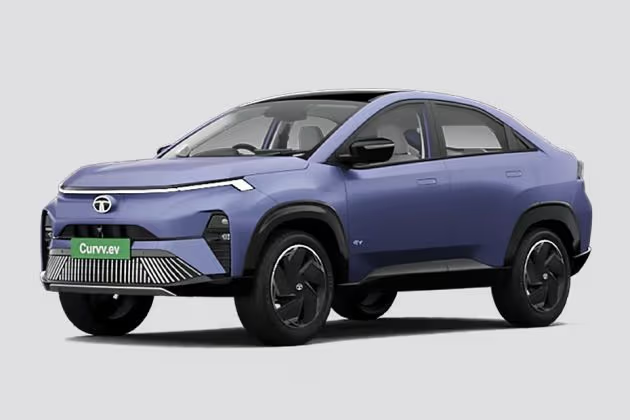
The Tata Curvv EV 55kWh mileage varies significantly depending on which drive mode is selected.
Eco Mode
Torque is limited to 70 percent of the motor’s 215 Nm. Maximum speed is capped at 120 kmph. Default regenerative braking is Level 2 in city conditions and Level 1 recommended on highway. All Autocar India range testing was conducted in Eco mode. This is the mode that produces the 365 km combined figure.
City Mode
Full torque and power are available. No speed restriction applies. Regen defaults to Level 2. Performance is noticeably more responsive than Eco. Range reduction versus Eco mode is estimated at 10-15 percent in typical use, making City the preferred mode for spirited urban driving where the full 40-50 km city range per day is not at risk.
Sport Mode
Full 167 hp and 215 Nm are unlocked. The throttle mapping becomes more aggressive. Range reduction versus Eco mode is significant. Expect 20-30 percent shorter range at equivalent driving distances. Sport mode is best reserved for occasional overtaking, not as a default for range-conscious buyers.
Regenerative braking levels (1-4): Level 4 enables one-pedal driving: the car decelerates sharply when the accelerator is released, without touching the brake pedal. This recovers the most energy in city stop-start use but requires adjustment for new users. Level 1 feels closest to a conventional car’s coasting behaviour and is best for highway use.
Tata Curvv EV km per kWh and Tata Curvv EV Mileage: Efficiency in Numbers
The Tata Curvv EV km per kWh figures, confirmed by Autocar India’s standardised range test:
City: 6.75 km/kWh | Highway: 6.52 km/kWh | Combined: 6.64 km/kWh
The 365km real-world range verified by Autocar India places the Curvv EV among the more efficient electric SUVs in its class. The 6.64 km/kWh combined result for a 167 hp electric SUV coupe weighing approximately 1,750 kg is strong, and the LFP battery chemistry sustains this in Indian summer heat.
LFP batteries are more thermally stable than NMC alternatives. In Indian conditions where ambient temperatures regularly exceed 40 degrees Celsius, NMC battery management systems derate performance to protect cells, reducing both power output and effective range. The Curvv EV’s LFP pack degrades less aggressively in heat, helping maintain rated efficiency across the year.
Running cost at 6.64km/kWh efficiency: At ₹8 per kWh average household electricity tariff, battery consumption translates to approximately ₹1.20 per km. At 40 km/day: approximately ₹48 per day. Monthly at 1,200 km: approximately ₹1,440 — compared to approximately ₹10,500 per month for a petrol midsize SUV at 12 km/l and ₹105 per litre. Monthly saving: approximately ₹9,060.
Tata Curvv EV Mileage vs Rivals: How It Compares
The Tata Curvv EV mileage compared to rivals shows the Curvv EV real world mileage of 365 km (Autocar India tested) sitting comfortably within the competitive range for its segment. For a detailed look at how the Mahindra BE 6 approaches range and value, the Mahindra BE 6 review covers that model’s real-world performance. For the MG Windsor EV Pro’s positioning, the MG Windsor EV guide provides current pricing and range context.
| Model | Battery | ARAI Range | Tested Real-World | Starting Price |
|---|---|---|---|---|
| Tata Curvv EV | 55 kWh LFP | 502 km | 365 km | ₹16.99L |
| Hyundai Creta Electric | 42 kWh | 420 km | ~300-320 km* | ₹18.02L |
| MG Windsor EV Pro | 52.9 kWh | 449 km | ~350 km* | ₹17.25L |
| Mahindra BE 6 | 59 kWh | 556 km | ~430-450 km* | ₹18.90L |
*Creta Electric, Windsor EV Pro and BE 6 real-world figures are owner-reported estimates, not standardised third-party test results.
The Mahindra BE 6 offers the best real-world range at an estimated 430-450 km, but starts ₹1.91 lakh higher. The Hyundai Creta Electric starts higher and delivers less range on a smaller battery. For buyers prioritising range-per-rupee, the Curvv EV’s ₹16.99 lakh entry point with 365 km confirmed range represents the strongest value in this comparison.
Tips: How to Maximise Tata Curvv EV Mileage in Indian Conditions
Default to Eco mode for routine use. The Tata Curvv EV mileage of 365 km real-world range was recorded entirely in Eco mode. Using City or Sport modes regularly will reduce this.
Match regen level to road type. Level 2 regen in city, Level 1 on highway. High regen at constant highway speeds creates drag without useful recovery, reducing EV energy efficiency at high speeds.
Pre-condition the cabin before departure. Run the climate control while plugged in before starting the journey. This brings the cabin to target temperature using grid electricity rather than the drive battery, preserving more range for driving.
Maintain tyre pressure. The Curvv EV’s recommended tyre pressure is typically 35-36 PSI. Under-inflated tyres increase rolling resistance disproportionately on an EV. Check pressure weekly.
For AC charging: charge to 80 percent for daily use; 100 percent for long trips. LFP batteries are more tolerant of high state-of-charge than NMC, but the 80 percent daily habit extends long-term battery health. Reserve full charges for trips that need the complete 365 km.
Use the Tata EV app for DC fast charging route planning. Planning charge stops before a long trip eliminates the anxiety of discovering unavailable chargers mid-journey.
Cruise at 80-90 kmph on highways. The tested highway efficiency of 6.52 km/kWh applies at this speed range. At 110-120 kmph, real-world highway range can drop to 280-300 km.
Frequently Asked Questions
What is the Tata Curvv EV mileage and real-world range?
The Tata Curvv EV real world range is 365 km, recorded by Autocar India in a standardised test with AC running, a single occupant and a mix of city and highway driving in Eco mode. Tata Motors claims a C75 real-world range of 400-425 km. The ARAI-certified figure is 502 km under controlled laboratory conditions.
What is the Tata Curvv EV mileage per charge?
The Tata Curvv EV mileage per charge is 365 km in real-world combined conditions. In city-only conditions, the usable range extends to approximately 334 km due to regenerative braking recovery. On highway-only use at 80-100 kmph, expect 320-350 km per charge.
How does Tata Curvv EV city mileage compare to highway mileage?
City efficiency is 6.75 km/kWh and highway efficiency is 6.52 km/kWh, both from Autocar India’s standardised test. City mileage is slightly better because regenerative braking at traffic signals recovers energy that is lost to friction in a petrol car. The difference is approximately 3.5 percent in favour of city driving.
What is the km per kWh efficiency of the Tata Curvv EV?
The Tata Curvv EV km per kWh efficiency is 6.75 in the city, 6.52 on the highway and 6.64 combined, all verified by Autocar India’s range test. At ₹8/kWh average household electricity tariff, this translates to approximately ₹1.20 per km in running cost.
How can I improve the Tata Curvv EV range on a single charge?
The most effective steps: drive in Eco mode as the default, use Level 2 regen in the city and Level 1 on the highway, pre-condition the cabin while plugged in before departure, maintain correct tyre pressure (35-36 PSI), and cruise at 80-90 kmph on highways. Charging to 80 percent daily helps maintain battery health.
Tata Curvv EV Mileage Verdict: 365 km Is the Number to Plan Around
The Tata Curvv EV mileage reality is 365 km per full charge in mixed Indian conditions with AC running. Not 502 km. Not 400-425 km. For Tata Curvv EV mileage planning, 365 km is the figure that earns the Curvv EV its place as a genuinely capable daily driver and moderate intercity tourer.
At 6.64 km/kWh combined efficiency and approximately ₹1.20 per km running cost, the Curvv EV is among the most economical midsize electric SUVs to operate in India. The LFP battery’s thermal stability makes that efficiency consistent across Indian summer and winter. At ₹16.99 lakh entry price with 365 km confirmed range, no rival in the comparison table offers better value on range per rupee.
For buyers doing 40-60 km daily in the city, charging once or twice a week is the realistic schedule. For Bengaluru-Mysuru or Mumbai-Pune, a single charge is sufficient. For anything beyond 300 km in one go, a 40-minute DC fast charger break is the honest answer, and at current charging network density in India’s major highway corridors, that break is increasingly easy to plan.