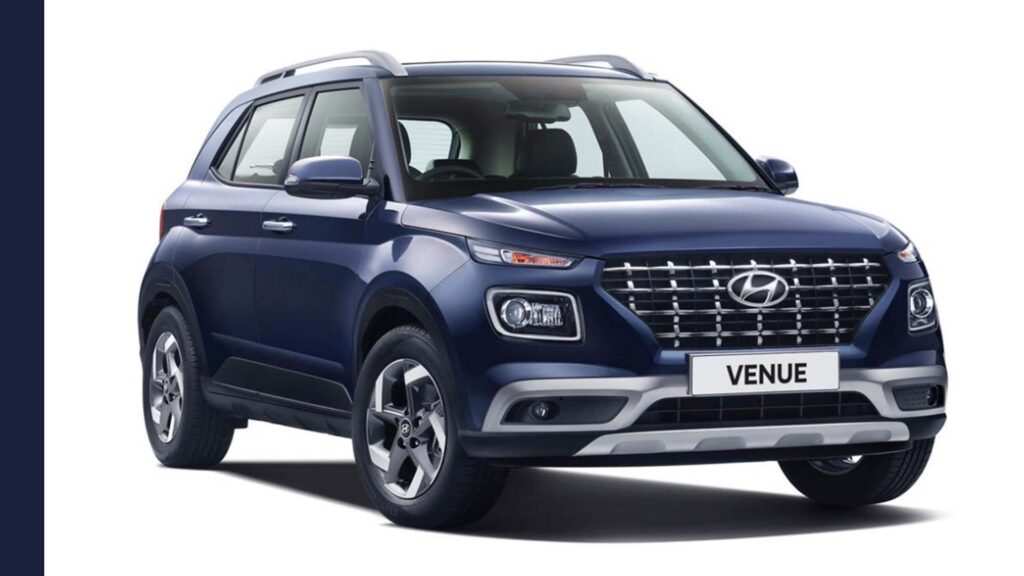
Hyundai Venue buyers in 2026 have more to think about than a single price number. Hyundai made the diesel automatic meaningfully more affordable on 10 March, then pushed through a price hike on several other variants just over two weeks later, and followed that with a Knight Edition launch in April — the hyundai venue latest updates arriving faster than most buyers can track. Add that to an already sprawling 22-variant lineup, and picking the right venue car new model takes more homework than it used to.
This piece walks through what the hyundai venue actually costs today, which of its three engines is genuinely worth having, real-world mileage against the ARAI numbers, and how it stacks up against the Nexon, Brezza, and Sonet. It also settles a search question that comes up more often than it should: no, the Venue doesn’t come as a 7-seater.
What the Hyundai Venue Actually Costs in 2026
The hyundai venue starts at ₹8.00 lakh ex-showroom for the base HX2 with the 1.2-litre petrol manual, and runs to roughly ₹15.51 lakh for the HX10 diesel automatic at the top. On-road pricing adds about 12% on top of that depending on the state — in Delhi, that works out to a range of roughly ₹9.0 lakh to ₹19.1 lakh across the full variant spread, which is worth checking against the hyundai venue on road price a dealer actually quotes rather than assuming a flat markup.
Hyundai raised prices on select Venue variants by up to ₹20,000 on 27 March 2026, though the base HX2 petrol manual, the flagship HX10 diesel AT, and the N Line were all left untouched. Anyone working off an older quote should reconfirm the specific trim they’re looking at, since not every variant moved.
Three Engines, and Only One of Them Disappoints
The Venue’s lineup runs three engines: a 1.2-litre naturally aspirated petrol making 83hp and 114.7Nm with a 5-speed manual only, a 1.0-litre turbo-petrol making 120hp with either a 6-speed manual or 7-speed DCT, and a 1.5-litre diesel making up to 116hp and 250Nm with a 6-speed manual or, as of this year, a 6-speed torque-converter automatic.
Two of these are genuinely good. The turbo-petrol pulls cleanly and the DCT shifts smoothly enough for daily traffic. The diesel is the strongest performer of the three on both torque and hyundai venue mileage petrol figures don’t come close to matching — the diesel manual’s 20.99kmpl ARAI rating is the best in the compact SUV segment, full stop.
The 1.2 NA petrol is the letdown. It’s the entry point into the range, and owners consistently describe it as underpowered, especially with a full load of passengers. Real-world mileage tends to disappoint relative to its already-modest 18.5–18.74kmpl ARAI figure too. It exists to hit a low starting price, and it does that job — but little else.
The Diesel Automatic Just Got Genuinely Affordable
Until March 2026, the diesel-automatic combination sat exclusively on the flagship HX10. That’s changed. Hyundai now offers it on the HX8 trim as well, at ₹13.70 lakh — a real accessibility shift for buyers who wanted the diesel’s torque and mileage without paying for every last feature on the range-topping trim. The hyundai venue diesel price gap between HX8 and HX10 automatic variants is now small enough that it’s worth cross-checking exactly what each trim includes before assuming the top spec is the only route to that gearbox-engine pairing.
Mileage: What ARAI Claims vs What Owners Actually See
The full ARAI spread looks like this: 18.5–18.74kmpl on the 1.2 petrol, up to 20kmpl on the 1.0 turbo-petrol DCT, 20.99kmpl on the 1.5 diesel manual, and 17.9kmpl on the diesel automatic. That diesel manual figure remains the standout — it’s the best hyundai venue mileage figure across the entire lineup and among the best in its segment generally.
None of these numbers survive contact with actual traffic unchanged. Real-world mileage typically comes in 15 to 25% below the ARAI figure depending on driving style, AC use, and how much of the drive is stop-start city traffic versus open road. A diesel manual owner claiming a genuine 20kmpl is doing well; someone expecting the full 20.99kmpl on a daily city commute will likely be disappointed.
Which Variant Is Actually Worth Buying?
The HX5 tier is the one most commonly recommended, since it’s the point where all three engine and gearbox combinations become available alongside a feature set that covers daily needs without unnecessary extras. Anyone comparing this as a new car venue buyers should shortlist against rivals will find HX5 the natural benchmark trim. Buyers who want more cabin polish without stretching to the flagship should look at HX7 or HX8 instead — both add a noticeably more premium interior over the mid-range trims.
At the top, hyundai venue top model price sits around ₹15.51 lakh for the HX10 diesel automatic, or a separate N Line trim above that for buyers who want the sportier 120hp turbo-petrol character with either manual or DCT gearboxes. The N Line is mechanically identical to the standard turbo-petrol Venue — the difference is styling and positioning, not what’s under the bonnet.
Six Airbags Standard, but ADAS Isn’t Everywhere
Every Venue variant, regardless of trim or engine, comes with 6 airbags as standard, along with disc brakes on all four wheels, a tyre pressure monitoring system, and an electronic parking brake with auto-hold. The Venue also carries a 5-star Bharat NCAP rating, which covers the range broadly rather than being tied to one specific trim.
The hyundai venue safety rating story gets more selective once Level 2 ADAS enters the picture. Lane keep assist, adaptive cruise control, autonomous emergency braking, and high-beam assist are specifically limited to the HX10 diesel-automatic and the N Line N10 DCT variants. Buyers who want that suite need to shop those two specific configurations rather than assume it trickles down the range the way the airbag count does.
No, the Venue Isn’t a 7-Seater
This comes up often enough to address directly: the Venue is strictly a 5-seat compact SUV. There’s no three-row option anywhere in Hyundai’s India lineup at this size, and searches for a venue 7 seater are almost certainly landing on the wrong nameplate or segment entirely. Buyers specifically needing three rows would have to look at a different body style, or a larger SUV altogether, since Hyundai doesn’t offer that configuration on this platform.
Hyundai Venue vs Its Closest Rivals
The Venue’s closest fight is with the Tata Nexon, Maruti Suzuki Brezza, and Kia Sonet — the last of which shares enough underlying hardware with the Venue that some spec sheets read almost identically. Comparing hyundai car venue against these three shows where the real gaps sit.
| Model | Ex-Showroom Price (Starting) | Engine Options | Best Mileage (ARAI) | Safety Rating |
|---|---|---|---|---|
| Hyundai Venue | ₹8.00 Lakh | 1.2 Petrol, 1.0 Turbo-Petrol, 1.5 Diesel | 20.99 kmpl (diesel MT) | 5-Star Bharat NCAP |
| Tata Nexon | ₹7.37 Lakh | 1.2 Turbo-Petrol, 1.5 Diesel, CNG | 24.08 kmpl (diesel) | 5-Star (Global NCAP) |
| Maruti Suzuki Brezza | ₹8.26 Lakh | 1.5 Petrol, CNG (no diesel) | 22.1 km/kg (CNG) | Verify current Bharat NCAP score before publishing |
| Kia Sonet | ₹7.30 Lakh | 1.2 Petrol, 1.0 Turbo-Petrol, 1.5 Diesel | 24.1 kmpl (diesel) | Verify current Bharat NCAP score before publishing |
The venue car details worth noting against this table: it’s the only one here offering a diesel automatic at all, and the Sonet — its closest mechanical cousin — actually edges it out on outright diesel mileage despite sharing so much underlying engineering. Brezza remains the only one of the four without a diesel option entirely.
Note: rival mileage and safety figures should be reconfirmed at publish time, since several of these models have had recent variant or safety-testing updates.
Before You Book a Venue
- Skip the 1.2 NA petrol unless the lower purchase price is the deciding factor — the turbo-petrol and diesel both drive and return mileage more convincingly
- Check whether the March 2026 price hike affected the specific variant being quoted, since not all trims moved
- If ADAS matters, confirm it’s specifically the HX10 diesel-AT or N Line N10 DCT being quoted — it isn’t available lower down the range
- Compare the new HX8 diesel-AT combination against the flagship HX10 before assuming the top trim is the only way to get that gearbox-engine pairing
- Don’t shortlist the Venue expecting a 7-seat option — confirm seating configuration before test-driving if that’s a hard requirement
- Cross-shop the Kia Sonet specifically, given how closely related the two are mechanically — feature and price differences are often where the real decision lies
Frequently Asked Questions
1. What is the on-road price of the Hyundai Venue?
On-road price runs roughly 12% above the ex-showroom figure depending on the state. In Delhi, that puts the full range at approximately ₹9.0 lakh to ₹19.1 lakh across variants.
2. What is the mileage of the Venue?
ARAI figures span 18.5–18.74kmpl on the 1.2 petrol, up to 20kmpl on the 1.0 turbo-petrol DCT, and 20.99kmpl on the 1.5 diesel manual — the best in the segment. Real-world mileage typically runs 15–25% lower than these figures.
3. Is the Hyundai Venue diesel worth buying?
Yes, particularly for high-mileage or highway-heavy drivers. The diesel-automatic combination is now available on the more accessible HX8 trim rather than only the flagship HX10, which makes it a more realistic option than it was before March 2026.
4. Does the Hyundai Venue come in a 7-seater version?
No. The Venue is a 5-seater only, and Hyundai doesn’t offer a three-row option at this size in India.
5. What is the safety rating of the Hyundai Venue?
The Venue holds a 5-star Bharat NCAP rating with 6 airbags standard across the range. Level 2 ADAS, however, is limited specifically to the HX10 diesel-AT and N Line N10 DCT variants.
Where the Hyundai Venue Actually Stands in 2026
The Venue backs up its asking price with genuine strengths: best-in-class diesel mileage, a diesel-automatic combination that’s finally within reach on a mid-tier trim rather than locked to the flagship, and a 5-star safety rating that applies across the board rather than only on paper for the top trim. The 1.2 NA petrol drags the range down, and ADAS availability is narrower than the marketing might suggest at a glance, but neither of those undoes what the diesel and turbo-petrol variants get right.
Anyone shortlisting a hyundai venue should look specifically at the HX5 or HX8 diesel-automatic, test-drive it against the Sonet given how closely related the two actually are, and skip the base 1.2 petrol unless the lowest possible price is the only thing that matters.
For further reading, buyers can check Hyundai India’s official Venue page for the latest confirmed pricing and Autocar India’s Venue coverage for variant-by-variant updates. Readers comparing this against a similarly positioned Mahindra SUV can also check our related guide on Mahindra BE 6: A Great Car, But the Batman Edition Was a Terrible Mess.