Lamborghini India operates through the brand’s authorised dealer network, with showrooms in Mumbai and New Delhi serving ultra-high-net-worth buyers. The current lineup spans the Urus super SUV, the Huracan V10 supercar, and the V12 hybrid Revuelto. Ex-showroom pricing starts at approximately ₹3.5 crore for the Huracan EVO and reaches ₹9 crore+ for the Revuelto. This guide covers every current model, their real specifications, ownership costs, and how the Italian marque compares with Ferrari and Porsche for Indian buyers.
What Is Lamborghini and Why It Commands Attention in India
Ferruccio founded the marque in Sant’Agata Bolognese, Italy, in 1963 — initially a tractor manufacturer who pivoted to sports cars after a contentious exchange with Enzo Ferrari over clutch quality on a 250 GT. The Volkswagen Group acquired the brand through Audi AG in 1998, and today every car leaves the Sant’Agata factory with VW Group engineering oversight — a shift that measurably improved build quality and long-term reliability compared to earlier decades.
The Lamborghini logo — a raging bull on a black shield — reflects Ferruccio’s Taurus birth sign and a fighting bull he encountered at a Spanish bullfight in the 1960s. Every production model carries the name of a famous fighting bull: Miura, Countach, Diablo, Murciélago, Gallardo, Huracán, Aventador, and Ur us all draw from this tradition.
India’s ultra-HNI buyers — entrepreneurs, tech founders, Bollywood personalities, and IPL franchise owners — are drawn to this brand for the engine theatre and aggressive styling that no German alternative replicates. The brand covers two primary showrooms in New Delhi and Mumbai, with an authorised workshop extending to Bengaluru.
Lamborghini Car Price in India — All Current Models
Every car enters India as a CBU (Completely Built Unit), attracting 100% customs duty plus 15% IGST and 1% TCS — placing ex-showroom prices at approximately 3–4 times European MSRP. State-level RTO charges vary: Mumbai and Delhi buyers face differing slabs. Exchange rate movements also affect pricing periodically; buyers should verify current figures at an authorised dealership.
The Lamborghini Gallardo (2004–2013) was the brand’s global bestseller before the Huracán replaced it in 2014. Pre-owned Gallardos remain the most accessible entry point in India’s second-hand ultra-luxury market, with examples available between ₹80 lakh and ₹1.5 crore depending on variant, year, and condition.
India Lineup — Approximate Ex-Showroom Pricing (August 2026)
| Model | Engine | Power | 0–100 kmph | Ex-Showroom (Approx.) | Best For |
|---|---|---|---|---|---|
| Huracán EVO | 5.2L V10 NA | 630 bhp | 2.9 sec | ~₹3.5 Cr | Daily-use supercar |
| Huracán STO | 5.2L V10 NA | 640 bhp | 3.0 sec | ~₹4.99 Cr | Track-focused variant |
| Urus S | 4.0L twin-turbo V8 | 666 bhp | 3.5 sec | ~₹4.18 Cr | Family super-SUV |
| Urus Performante | 4.0L twin-turbo V8 | 666 bhp | 3.3 sec | ~₹4.91 Cr | Performance SUV |
| Revuelto | 6.5L V12 hybrid | 1,001 bhp | 2.5 sec | ~₹9.0 Cr+ | V12 flagship |
All prices are approximate ex-showroom Delhi, August 2026. RTO registration, insurance, TCS, and dealer handling are additional. Confirm at authorised dealerships before committing a booking amount.
Lamborghini Urus — The Super SUV Dominating Indian Sales
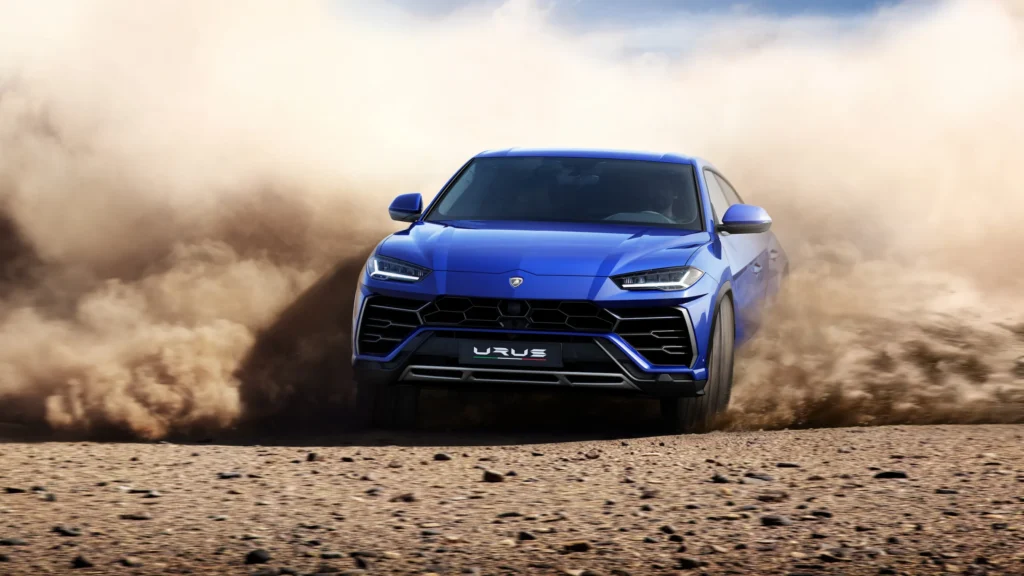
The Urus is the brand’s global bestseller and the most frequently sighted model on Indian roads. Two variants reach buyers here: the Urus S at ~₹4.18 crore and the Urus Performante at ~₹4.91 crore ex-showroom. Both run a 4.0L twin-turbo V8 producing 666 bhp — 0–100 kmph arrives in 3.5 seconds (S) and 3.3 seconds (Performante).
Indian buyers consistently choose the Urus over low-slung alternatives for practical reasons: four adult seats, a usable boot, and air suspension with adjustable ride height that manages India’s variable road quality far better than a flat supercar. The ADAS package — adaptive cruise, lane departure warning, night vision, and a 360-degree parking system — rivals the Porsche Cayenne Turbo GT at a comparable price. The Ferrari Purosangue (₹7.5 crore+) is the only competing ultra-luxury SUV in the same prestige bracket.
Buyers conducting a side-by-side assessment can find a full breakdown in the Urus vs Cayenne India super-SUV comparison. Real-world fuel economy in Indian city traffic sits at approximately 5–7 kmpl on 97–100 RON premium petrol. Highway use returns approximately 9–11 kmpl.
Lamborghini Huracan — The Entry-Level Supercar for Indian Buyers
The Huracán assumed the Gallardo’s role — the accessible, higher-volume model in the lineup. Since 2014, it has run a 5.2L naturally aspirated V10 producing 630 bhp (EVO) and 640 bhp (STO), available in both Coupé and Spyder body styles across AWD and RWD configurations.
For Indian road conditions, the Huracán EVO AWD is the practical variant. The STO is a road-legal track car — aggressive aerodynamics, rear-wheel drive, and minimal sound deadening make it poorly suited to everyday city use. Authorised service visits require travel to Mumbai or Delhi, and city fuel consumption runs to 4–6 kmpl on premium petrol.
The Huracán is nearing the end of its production cycle globally. The brand plans a hybrid successor following the powertrain direction the Revuelto established. Buyers who want the pure, unassisted V10 experience — without hybrid assistance — should act before this generation closes.
Lamborghini Aventador, Sián, and the V12 Legacy
The Aventador ran from 2011 to 2022 as the flagship naturally aspirated V12, producing 700–770 bhp across its variants. The peak Aventador SVJ held the Nürburgring production car lap record at its launch. Indian collectors and notable personalities purchased SVJ units through official channels; pre-owned Aventadors now appear in India between ₹3.5 crore and ₹6 crore depending on variant and condition.
The Lamborghini Sian marked the brand’s first hybrid application — a limited run of 63 coupes and 19 roadsters worldwide, pairing a 6.5L V12 with a supercapacitor hybrid system to produce 819 bhp. None were allocated through the official Indian dealership. All 63 coupes sold before public announcement; some units have entered India via grey import channels.
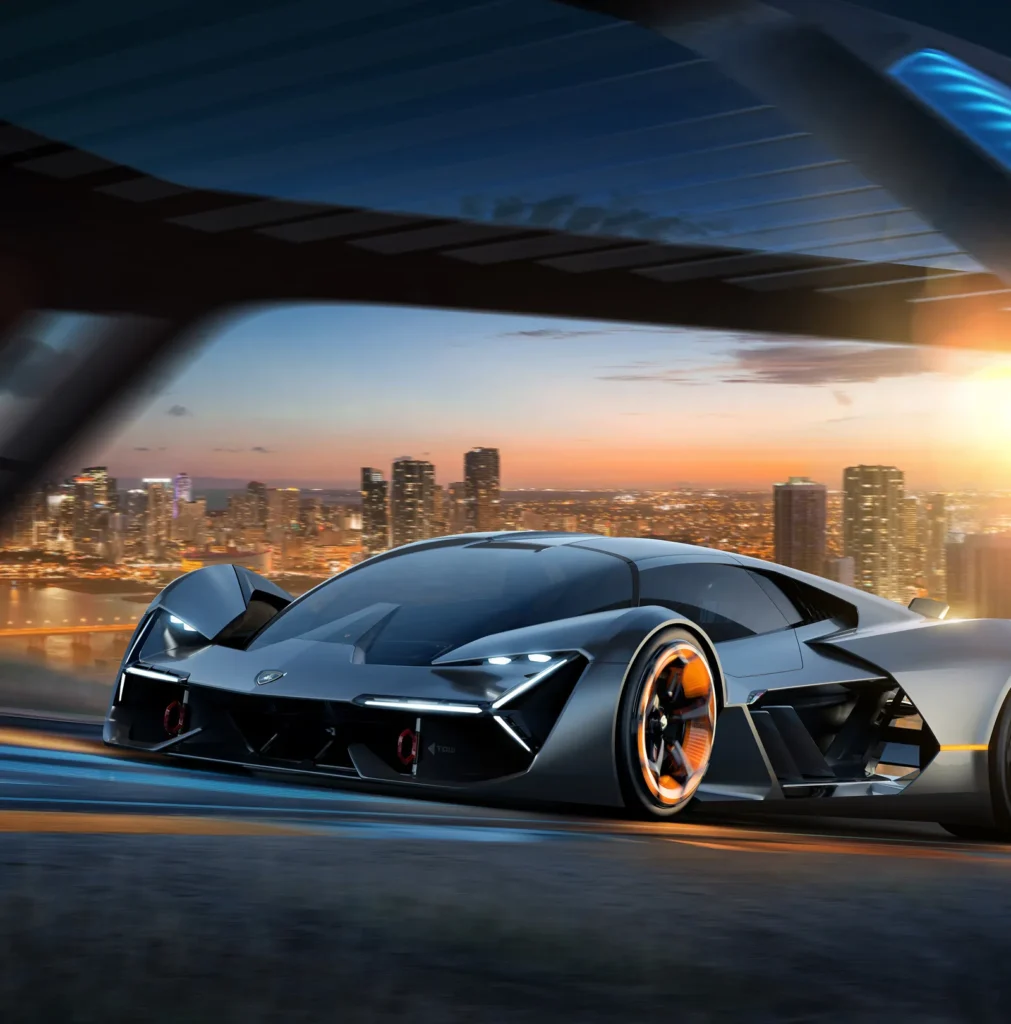
The Lamborghini Terzo Millennio is a concept developed in partnership with MIT, unveiled in 2017. Fully electric, it features self-healing carbon fibre panels that embed micro-supercapacitors within the bodywork material. It is not a production vehicle. The current V12 flagship in India is the Revuelto — a 6.5L V12 paired with three electric motors producing 1,001 bhp combined, available at approximately ₹9 crore+ ex-showroom Delhi.
Six Things Indian Buyers Must Know Before Purchasing
CBU import taxes place Indian pricing 3–4× above European MSRP. Every car enters India as a Completely Built Unit attracting 100% customs duty, 15% IGST, and 1% TCS. Indian prices are among the highest for this brand anywhere globally. No local assembly exists and no path to lower pricing through domestic production.
Authorised service centres operate in Mumbai and Delhi only. Buyers in Pune, Hyderabad, or Bengaluru must transport vehicles for major servicing and all warranty work. The Bengaluru workshop handles routine maintenance only. Factor transport logistics into the annual ownership cost calculation.
Insurance premiums are a significant annual cost. Comprehensive cover on an Urus or Huracán carries annual premiums in the ₹8–15 lakh range depending on IDV, city of registration, and insurer. Gathering three independent quotes before purchase can save several lakh annually on identical coverage.
V8, V10, and V12 engines require 98 RON premium petrol. India’s standard pump petrol is 91 RON. HP Power or Shell V-Power (97–100 RON where available) is the recommended grade. Consistent use of standard petrol affects combustion efficiency and accelerates wear on precision engine components calibrated for higher-octane fuel.
A pre-owned Lamborghini car requires complete verified documentation. Any second-hand purchase — particularly older Gallardo or Huracán units — must include full service history from an authorised centre, a factory VIN check, and a pre-purchase inspection by an authorised technician. The Indian pre-owned ultra-luxury market has grown; due diligence is essential on every transaction.
Parking in dense urban areas presents a practical logistics challenge. Wide, low-profile vehicles exceed standard parking bay dimensions in many Mumbai and Delhi multi-storey structures. Buyers in South Mumbai or central Delhi should verify dedicated private parking infrastructure before finalising purchase — street parking is not a realistic option.
Frequently Asked Questions
What is the price of a Lamborghini in India?
Ex-showroom prices range from approximately ₹3.5 crore (Huracán EVO, Delhi) to ₹9 crore+ (Revuelto). The Urus S starts at ~₹4.18 crore. On-road cost in most Indian states adds approximately ₹50–70 lakh covering RTO registration (15–20% of ex-showroom), insurance, 1% TCS, and handling charges. Confirm current pricing at the authorised New Delhi or Mumbai showroom before finalising a budget.
Which is the most affordable model available in India?
The Huracán EVO is the least expensive new car in the current lineup at ~₹3.5 crore ex-showroom Delhi. For pre-owned buyers, Gallardo units (2004–2013) are available between ₹80 lakh and ₹1.5 crore through authorised pre-owned dealers and vetted private sellers — the brand’s most accessible second-hand entry point in India.
How many units are sold in India each year?
The brand recorded 89 unit sales in India in 2023 — a record for the marque in the country at the time. The Urus consistently accounts for 50–60% of annual Indian volume. India ranks among the brand’s top 15 global markets. These figures are sourced from the brand’s official press communications. For a broader view of India’s luxury car segment, Autocar India’s ultra-luxury car coverage tracks new arrivals and segment sales trends.
Is the Sián available to buy in India?
The Sián was produced in a run of 63 coupes and 19 roadsters worldwide, all pre-sold before public announcement. It was never allocated through the official Indian dealer network. Units that have reached India did so via grey import channels. Any unit on the Indian market requires careful inspection, factory VIN verification, and full documentation review before purchase — given both the rarity and the values involved.
What is the Terzo Millennio?
The Terzo Millennio (“third millennium”) is a concept unveiled in 2017 through a collaboration with MIT. It is a fully electric design study featuring self-healing carbon fibre bodywork that embeds micro-supercapacitors within the panel structure. It is not a production car and has never been offered for sale anywhere. It represents the brand’s research direction toward full electrification beyond the hybrid architecture used in the current Revuelto.
Final Verdict — Is the Italian Supercar Worth Buying in India?
For buyers seeking the most dramatic car ownership experience in India, the brand delivers without qualification. The Urus is the most practical starting point for Indian road conditions — four seats, adjustable ride height, daily usability, and the full prestige of the raging bull badge in a package the low-slung supercars cannot match in everyday city traffic.
The trade-offs are real: two showrooms nationwide, import-driven pricing that makes every model among the most expensive in the world relative to European MSRP, and fuel and insurance costs requiring financial planning beyond the sticker price.
The Lamborghini purchase decision comes down to how the car will be used. For daily versatility, the Urus wins. For a pure driver’s machine with V10 soundtrack and no compromise, the Huracan delivers. For buyers assessing the full ultra-luxury import landscape, the luxury car India price guide 2026 covers the complete competitive set.