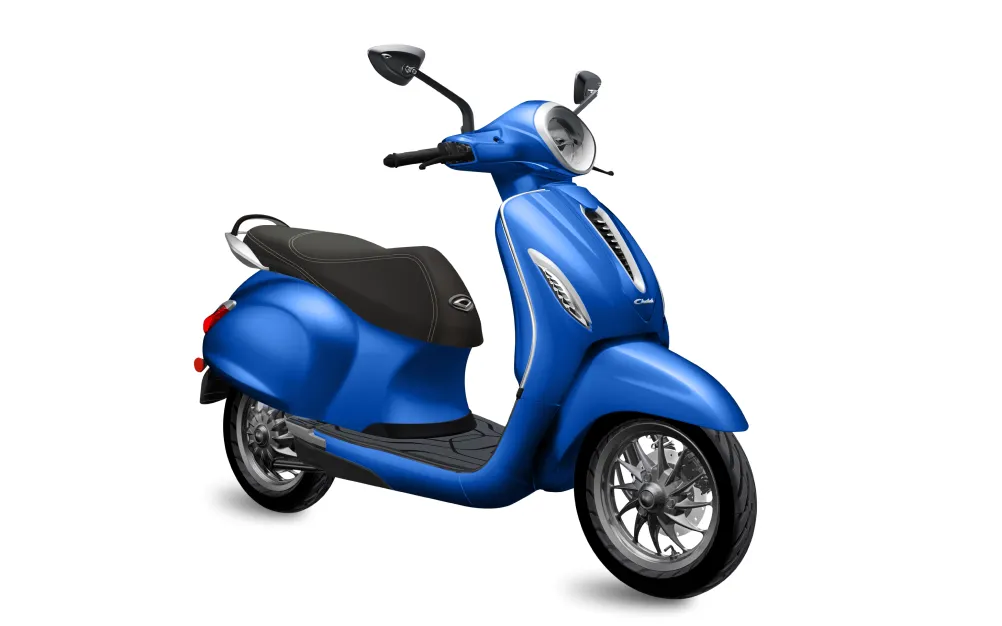
Chetak electric scooter price used to be a simple question with one answer. Not anymore. Bajaj added a genuinely cheaper entry variant back in January 2026, then pushed a mid-year update across the rest of the range that raised top speeds and cut charging times. Ask “what does a Chetak cost” today and the honest answer depends entirely on which of five variants someone actually means.
This piece breaks down the bajaj chetak electric scooter price across the full lineup, what the 2026 update actually changed, how real-world range compares to the ARAI number, and where the Chetak genuinely wins and loses against the TVS iQube, Ather 450X, and Ola S1. Anyone searching chetak electric scooter price in india deserves the full five-variant picture, not just a headline “starting from” figure.
What Each Chetak Variant Actually Costs
The lineup runs five deep: C2501, 3001, 3503, 3502, and 3501. Ex-showroom prices span ₹96,400 for the base C2501 to ₹1.34 lakh for the flagship 3501. That’s a genuinely wide spread for scooters that all carry the same Chetak badge, and the gap reflects real hardware differences, not just trim-level polish. Anyone quoting a single chetak electric scooter price without naming the variant is leaving out the part that actually matters.
Checking the chetak scooter price electric buyers actually pay means looking past the “starts from” number most listings lead with. The 3001, 3503, and 3502 sit in between, each adding incremental range, motor output, or feature content over the one below it. Nobody shopping the Chetak should assume the base price applies to the scooter they’ve seen in a review or a friend’s driveway.
The C2501 Exists to Undercut the iQube, Not to Replace the 35-Series
The C2501 launched in January 2026 as a genuinely different scooter, not a stripped-down version of the pricier 35-series. It runs a hub motor rather than the mid-drive setup on the higher variants, and its real-world range sits around 113km — enough for daily city use but noticeably short of what the 35-series delivers. Anyone comparing the electric chetak price of the C2501 against the bajaj chetak price of a 35-series model is really comparing two different scooters wearing the same badge.
Its actual job is competing with the TVS iQube’s entry-level variants, not replacing anything else in Bajaj’s own lineup. Buyers comparing it against the 3001 or 3503 are comparing two scooters built for different budgets and different expectations, not two versions of the same thing.
On-Road Price Is Where the Real Number Lives
None of the ex-showroom figures above are what anyone actually pays at a dealership. Add RTO registration and insurance, and the chetak electric scooter on road price typically lands between ₹1.07 lakh and ₹1.49 lakh, depending on the city and its specific RTO charges. This gap between ex-showroom and on-road chetak electric scooter price is exactly why comparing two dealer quotes matters more than comparing two brochure numbers.
That gap between ex-showroom and on-road isn’t unique to this bajaj scooter, but it’s worth stating plainly rather than letting the lower ex-showroom figure set unrealistic expectations. A buyer budgeting off the ₹96,400 headline number for the C2501 should expect to pay noticeably more once registration and insurance are added.
What Actually Changed in the 2026 Update
The mid-2026 update wasn’t a cosmetic refresh — it changed real numbers across every variant, and it’s a big part of why the chetak electric scooter price conversation looks different than it did a year ago. Top speed rose across the board: the 3501 and 3502 now hit 80kmph, up 7kmph from before; the 3503 and 3001 climbed to 70kmph, also a 7kmph jump; and the C2501 gained 5kmph, now topping out at 60kmph.
The flagship 3501’s motor output rose to 4.8kW. Charging got faster too — the 3001’s 0-80% DC fast-charge time dropped from 3 hours 50 minutes to 2 hours 55 minutes, a genuinely useful improvement for anyone relying on a public charger mid-day. Sport and Eco riding modes, along with hill-hold assist, moved from being locked to specific trims to standard equipment across the entire C30 and C35 series.
Range: The ARAI Number vs What Owners Actually Get
Bajaj’s ARAI-certified figure for the 35-series, running its 3.5kWh battery, sits at around 153km. That’s the number on the spec sheet, and it’s not fabricated — it’s just not what most owners see day to day, since ARAI testing happens under controlled lab conditions that rarely match real traffic.
Real-world range commonly comes in around 110 to 130km depending on riding style, load, and how much of the commute involves stop-start traffic versus steady cruising. That’s a meaningful gap from the claimed figure, and it’s worth planning around the lower number rather than the ARAI one, especially for anyone whose daily commute sits close to the upper end of that range. Battery life itself is generally rated for 5 to 7 years or roughly 70,000km, which matters more for total cost of ownership than the headline range figure ever will.
Is the Chetak the Best Electric Scooter in India? It Depends What You Want
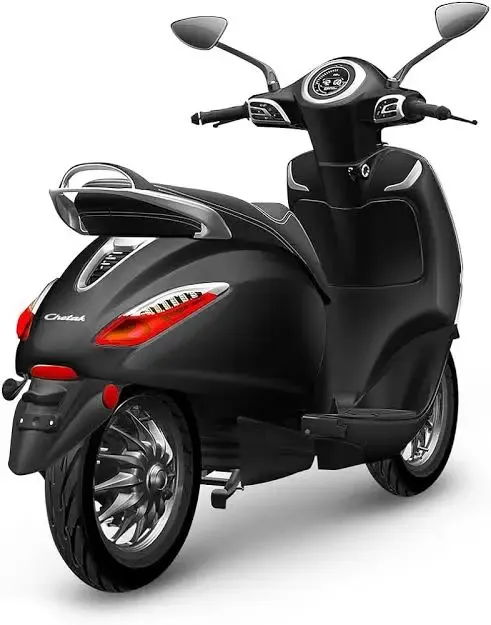
The honest answer to whether this is the best electric scooter in india is that it depends entirely on what’s being optimized for — and it’s a different question from simply asking what the chetak electric scooter price is. The Chetak wins clearly on retro styling and its all-metal body panel construction — it looks and feels more substantial than most rivals, and its dealer and service network gives it a practical edge for owners worried about after-sales support.
The Ather 450X and Ola S1 generally lead on outright performance, quicker acceleration, and in some configurations, longer claimed range. The TVS iQube competes closely with the Chetak on price and comfort-focused commuting rather than performance. None of these four is a universal winner — the Chetak is the strongest pick specifically for buyers who value classic looks and a dependable service footprint over outright speed or range numbers.
Bajaj Chetak vs Its Nearest Rivals
The bajaj chetak sits in genuine competition with three other names buyers consistently cross-shop: the TVS iQube, the Ather 450X, and the Ola S1 series. Each ev scooter in this group targets a slightly different priority, which shows clearly once the numbers sit side by side.
| Model | Ex-Showroom Price (Starting) | Claimed Range | Standout Strength |
|---|---|---|---|
| Bajaj Chetak | ₹96,400 | Up to 153km (ARAI, 35-series) | Retro metal-body build, wide service network |
| TVS iQube | ₹1.15 Lakh | Varies by variant/battery | Smooth city ride, strong after-sales reputation |
| Ather 450X | ₹1.54 Lakh | Up to 126km | Outright performance, fast heat management |
| Ola S1 (series) | Verify current price at publish time | Verify current range at publish time | Largest battery options, most underseat storage |
Ola’s exact pricing and range shift often enough by variant and battery size that any single figure risks going stale within weeks — check its current official listing directly rather than relying on a number quoted elsewhere. Among the confirmed figures here, the electric scooter comparison makes one thing clear: the Chetak undercuts every rival on entry price while still offering the longest claimed range on paper.
Before You Buy a Chetak
- Decide between the C2501 and the 35-series based on budget first — they’re aimed at genuinely different buyers, not just different price points on the same scooter
- Plan around the real-world 110-130km range rather than the 153km ARAI figure, especially for longer daily commutes
- Check whether Sport/Eco mode and hill-hold assist are standard on the specific variant being quoted, since this changed mid-2026
- Compare on-road price across 2-3 dealers, since RTO and insurance charges shift the final number meaningfully by city
- Cross-shop the TVS iQube specifically if the C2501 is the variant under consideration, since the two now compete almost directly on price
- Ask about battery warranty terms directly, since the 5-7 year/70,000km figure is a general industry range rather than a fixed number that applies identically across every EV two-wheeler brand
An electric scooty bought on a headline price alone is the most common regret owners report — checking the actual variant, its real range, and its on-road total avoids that. Buyers searching more broadly for e bike price comparisons should note the Chetak and its rivals here are electric scooters, not electric bicycles, even though the two terms sometimes get used interchangeably in casual conversation.
Frequently Asked Questions
1. What is the price of the Bajaj Chetak electric scooter?
The full chetak electric scooter price range runs ₹96,400 to ₹1.34 lakh ex-showroom across all 5 variants — C2501, 3001, 3503, 3502, and 3501 — not a single starting figure.
2. What is the on-road price of the Chetak in India?
Roughly ₹1.07 lakh to ₹1.49 lakh, depending on the city’s RTO charges and insurance costs.
3. What changed in the Chetak’s 2026 update?
Top speeds rose across every variant, DC fast-charging on the 3001 got noticeably quicker, and Sport/Eco riding modes plus hill-hold assist became standard rather than optional.
4. Is the Bajaj Chetak the best electric scooter in India?
It depends on priorities. The Chetak leads on build quality, retro styling, and service network reach, while the Ather 450X and Ola S1 generally win on outright performance.
5. What is the real-world range of the Chetak?
ARAI certifies the 35-series at around 153km, but most owners report a real-world range closer to 110-130km depending on riding conditions.
Which Chetak Variant Actually Makes Sense
The C2501 makes sense for budget-focused buyers who were already cross-shopping the TVS iQube’s entry variants — it’s a genuinely different, cheaper scooter, not a compromised version of the 35-series. The 3501 or 3502 make more sense for anyone who wants the updated 80kmph top speed and the full current feature set, now that Sport/Eco modes and hill-hold assist come standard rather than locked to a pricier trim.
Anyone still deciding on chetak electric scooter price across these five variants should test-ride the specific one under consideration rather than assume they’re all versions of the same scooter — the C2501 and the 35-series feel meaningfully different once actually ridden, not just on paper.
For further reading, buyers can check Bajaj’s official Chetak pricing page and Autocar India’s Chetak coverage for the latest confirmed figures. Readers comparing this against a similarly positioned Hyundai SUV can also check our related guide on Hyundai Venue: The Best Diesel in Its Class, and the One Engine to Avoid.