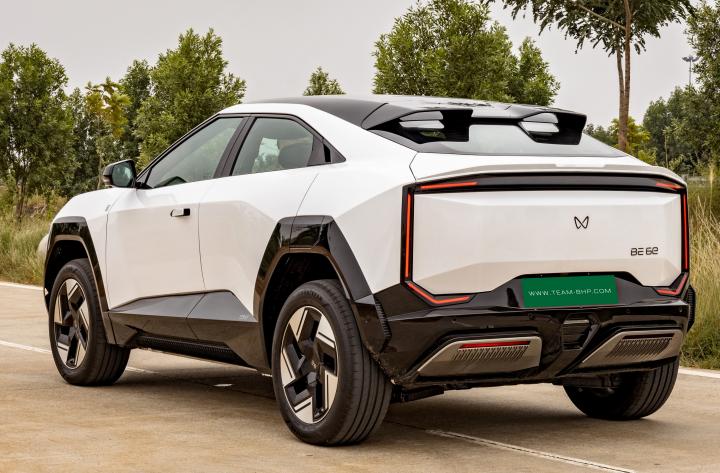
Mahindra recently did something few carmakers ever do: it offered to buy back its own limited-edition model from the first customers who bought it. The mahindra be6 Batman Edition sold out twice, and the second sellout upset the first batch of owners badly enough that Mahindra stepped in with a full refund offer. That’s the real story behind the BE 6 right now, and it’s worth understanding alongside the usual price-and-range questions before deciding whether the car itself is worth buying.
This piece covers where the standard mahindra be6 lineup is priced, what its real-world range looks like against the claimed number, and the full sequence of events behind the Batman Edition drama. It also stacks the BE 6 up against the Tata Curvv EV and Hyundai Creta Electric, since most shoppers land here after cross-shopping at least one of those two.
How Much Does the Mahindra BE 6 Actually Cost?
The mahindra be6 starts at ₹18.90 lakh ex-showroom and runs up to ₹26.90–27.65 lakh across the standard seven-variant lineup, spanning Pack One through Pack Three. Checking be6 mahindra price against the actual variant sheet matters more than the headline number, since that spread isn’t badge inflation — it tracks two genuinely different battery packs (59kWh and 79kWh) plus a real jump in safety and comfort kit at the top end.
Buyers often assume the price gap between entry and top trim on an EV is mostly software and trim tweaks. On the BE 6, it isn’t. The 79kWh pack alone changes the car’s usable range meaningfully, and Pack Three adds hardware — Level 2 ADAS, a 360-degree camera, an auto-parking function — that Pack One simply doesn’t have the sensors for.
The Batman Edition Sold Out Twice — Then Mahindra Offered to Buy It Back
Mahindra’s first batch of 999 BE 6 Batman Editions sold out in 135 seconds. That’s the kind of number carmakers usually put in a press release and move on from. Mahindra didn’t move on — it opened a second batch of 999 units on 6 March 2026, priced ₹70,000 higher than the first batch at ₹28.49 lakh ex-showroom. That batch sold out too, in under seven minutes. Anyone searching be6 mahindra batman edition news right now is landing on the tail end of this exact sequence.
The problem was the first-batch buyers. A limited edition’s entire appeal rests on scarcity, and watching an identical second run appear seven months later, sell out just as fast, and cost more, made the “999 units, ever” pitch feel broken. The backlash showed up publicly enough that Mahindra responded directly.
On 18 March 2026, Mahindra offered a full buyback — at full invoice price — exclusively to the original 999 first-batch owners. This mahindra be6 batman edition buyback offer ran for 30 days from that date, meaning the window closed around mid-April 2026. It’s a resolved story at this point, not something a buyer today can still act on. Owners who wanted to take the offer had to coordinate it through their dealership rather than Mahindra directly.
What the Batman Edition Actually Adds Over a Regular Pack Three
The Batman Edition isn’t a separate model — it’s built on the Pack Three/79kWh specification, with Batman-trilogy-inspired styling and cabin details layered on top. Anyone assuming it’s purely a decal package is wrong; the underlying hardware is the same real 79kWh, 286hp setup available on any regular Pack Three. The themed elements are additive, not a downgrade dressed up in black paint.
Real-World Range vs the Claimed Number
Mahindra’s MIDC-claimed figures are 557km on the 59kWh pack and 683km on the 79kWh pack. Those numbers get quoted everywhere, and they’re not wrong exactly — they’re just not what a driver should plan a road trip around. Anyone comparing mahindra be6 range against a rival’s brochure figure should apply the same skepticism to both sides of that comparison.
Autocar India’s own real-world test of the 79kWh version returned 449km on a single charge, working out to 5.68km/kWh. That’s a meaningful 234km gap from the claimed figure, and the be 6 range that actually matters for trip planning is this tested number, not the MIDC one on the brochure.
Charging times differ by pack too. On a 7.2kW AC charger, the 59kWh battery takes 8.7 hours to fill, while the 79kWh takes 11.7 hours. DC fast charging is quicker on both — 20 minutes regardless of pack, though the 59kWh tops out at 140kW and the 79kWh supports up to 180kW.
What Pack One Gets You vs What You’re Paying for at the Top
Even the base Pack One isn’t stripped out. It comes with 12.3-inch dual screens, wireless Android Auto and Apple CarPlay, a rear camera, 6 airbags, auto wipers, cruise control, and rear AC vents standard. That’s a genuinely usable spec for a base trim, not a car designed to make you feel cheated into the next tier up.
Pack Three’s additions are where the real money goes: Level 2 ADAS, an augmented-reality head-up display, a seventh airbag, auto parking, a 360-degree camera, ventilated front seats, and a 1,400W 16-speaker Harman Kardon system with Dolby Atmos. Whether that jump is worth it depends entirely on whether ADAS and auto-parking matter to a given buyer — the audio system alone won’t justify several lakhs of difference, but the safety suite arguably does.
Where the Interior Gets It Right — and Where It Doesn’t
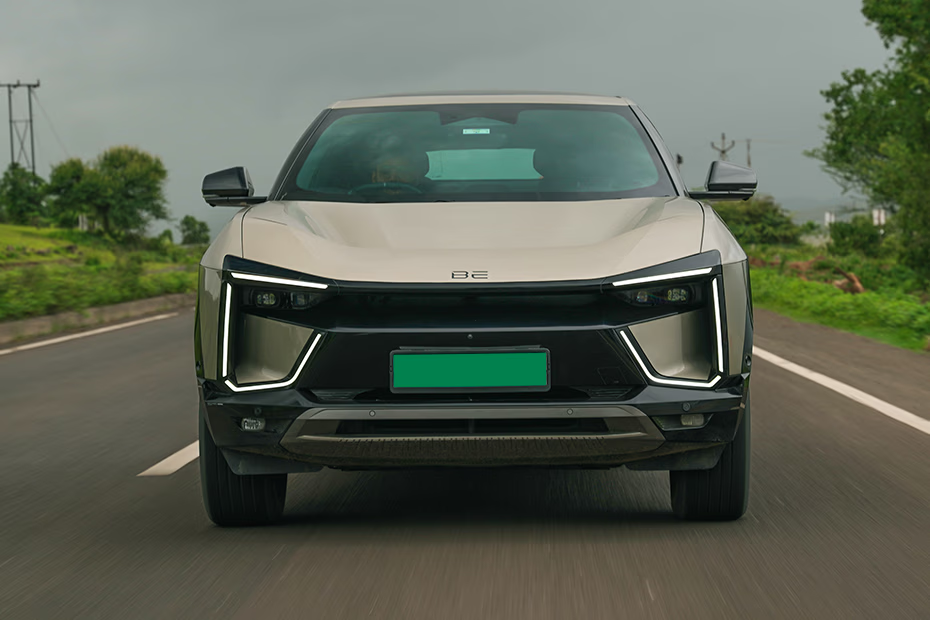
The be 6 interior commits fully to its concept-car looks, and some of that commitment backfires. The “halo loop” — a partition separating driver and front passenger — looks striking in photos, but it blocks the passenger’s access to the USB-C ports and removes what would otherwise be a second cup holder. It’s a design choice that photographs better than it lives with day to day.
The infotainment system has a similar problem. Wireless Android Auto and CarPlay work cleanly, but the native interface makes basic tasks — adjusting the AC, changing volume — take more steps than they should. Switching drive modes is more complicated than a car this expensive ought to require.
Space is the other trade-off. Rear headroom is tight because of the low, sloping roofline, and thick door pads eat into shoulder room for three-across seating. The 455-litre boot sounds reasonable on paper, but a high loading lip makes it feel smaller in practice than the number suggests.
Is the Mahindra BE 6 a Sports Car, or Just Styled Like One?
Some buyers search for “mahindra sports car” expecting something closer to a two-door performance machine than an SUV, and the styling doesn’t discourage that read. The mahindra be6 is aggressive, low-slung for its class, and quick — 6.7 seconds to 100kmph is genuinely brisk. The ride and handling balance backs that up too: it soaks up potholes like a proper SUV while changing direction with more agility than its size suggests.
None of that makes it a sports car. It’s a midsize electric SUV with sports-car styling cues and a genuinely well-sorted chassis — a meaningfully different thing from a two-door performance car, whatever the silhouette implies at a glance.
Mahindra BE 6 vs Its Nearest Rivals
The mahindra be6 doesn’t compete in a vacuum. The Tata Curvv EV and Hyundai Creta Electric both draw serious cross-shopping interest, and Mahindra’s own XEV 9e sits close enough in price that some buyers end up choosing between siblings rather than rivals.
| Model | Ex-Showroom Price (Starting) | Battery/Range (Claimed) | Standout Feature |
|---|---|---|---|
| Mahindra BE 6 | ₹18.90 Lakh | 59/79kWh, up to 683km (MIDC) | Ride/handling balance, striking design |
| Tata Curvv EV | ₹16.99 Lakh | 45/55kWh, up to 502km (ARAI) | Coupe-SUV design, 5-star Bharat NCAP |
| MG ZS EV | ₹16.75 Lakh | 50.3kWh, up to 461km (claimed) | Now the cheapest entry point in this group |
| Hyundai Creta Electric | ₹18.02 Lakh | 42–51.4kWh, up to 510km (claimed) | Stronger rear-seat comfort and ride quality |
| Mahindra XEV 9e (sibling) | ₹21.90 Lakh | 59/79kWh, up to 656km (MIDC) | Coupe-SUV styling, sister platform to the BE 6 |
Prices and range figures here move fast in this segment — several of these models have had updates within the past few months, so treat this as a snapshot rather than a fixed reference and check current listings before booking.
Before You Book a Mahindra BE 6
- Test the infotainment system’s basic functions yourself — AC and volume controls specifically — before assuming the touchscreen will be intuitive day to day
- Budget around the real-world 449km figure Autocar tested, not the 683km MIDC claim, when planning longer trips on the 79kWh pack
- Sit in the back seat before buying if rear passenger comfort matters, given the headroom and door-pad width concerns noted in reviews
- Compare Pack One against Pack Three side by side, since the ADAS and camera suite on the top trim is a genuine safety upgrade, not just a luxury add-on
- If drawn to a special edition, read the fine print on exclusivity claims — the Batman Edition’s own buyback saga is a real example of how limited-run promises can shift
- Cross-shop the Curvv EV and Creta Electric in person, since the BE 6’s driving dynamics are a genuine strength that’s hard to judge from spec sheets alone
Frequently Asked Questions
1. What is the price of the Mahindra BE 6 in India?
The mahindra be6 costs ₹18.90 lakh to ₹26.90–27.65 lakh ex-showroom across the standard lineup, before factoring in any limited editions.
2. What is the real-world range of the Mahindra BE 6?
Mahindra’s MIDC claim is 683km on the 79kWh pack, but Autocar India’s own test returned 449km in real-world driving — a gap worth planning around rather than ignoring.
3. Is the Mahindra BE 6 Batman Edition still available to buy?
No. Both limited batches of 999 units each sold out, and the buyback offer extended to first-batch owners closed in April 2026. It’s a resolved chapter in the car’s story now, not an active offer.
4. Why did Mahindra offer a buyback on the BE 6 Batman Edition?
The first 999 units sold out in 135 seconds. A second batch of 999 followed seven months later at a higher price and also sold out fast, which first-batch buyers felt undercut the edition’s exclusivity. Mahindra responded with a full buyback offer for that original group.
5. Is the Mahindra BE 6 a good alternative to the Tata Curvv EV or Hyundai Creta Electric?
It depends on priorities. The BE 6 wins on ride, handling, and outright design drama; the Curvv EV counters with a confirmed 5-star Bharat NCAP rating; the Creta Electric offers noticeably better rear-seat comfort and ride quality. None of the three is a strictly better car — they’re better at different things.
The Bottom Line
The mahindra be6 backs up its concept-car looks with real substance where it matters most: the ride and handling genuinely deliver, the base trim isn’t stripped to force an upsell, and the price ladder tracks real hardware differences rather than arbitrary badge tiers. The infotainment quirks and tight rear seat are real enough to test in person, not dismissible nitpicks, and the Batman Edition saga is worth knowing as context even though there’s nothing left to act on there now.
Anyone shortlisting a mahindra be6 should book a test drive and specifically try the infotainment system and rear seat before deciding, since those are the two areas where owner opinions diverge most.
For further reading, buyers can check Autocar India’s full Mahindra BE 6 review and the original Batman Edition buyback announcement. Readers comparing this against another recent Mahindra EV launch can also check our related guide on Mahindra XEV 9S Electric SUV: Genuinely Impressive, With One Real Catch.