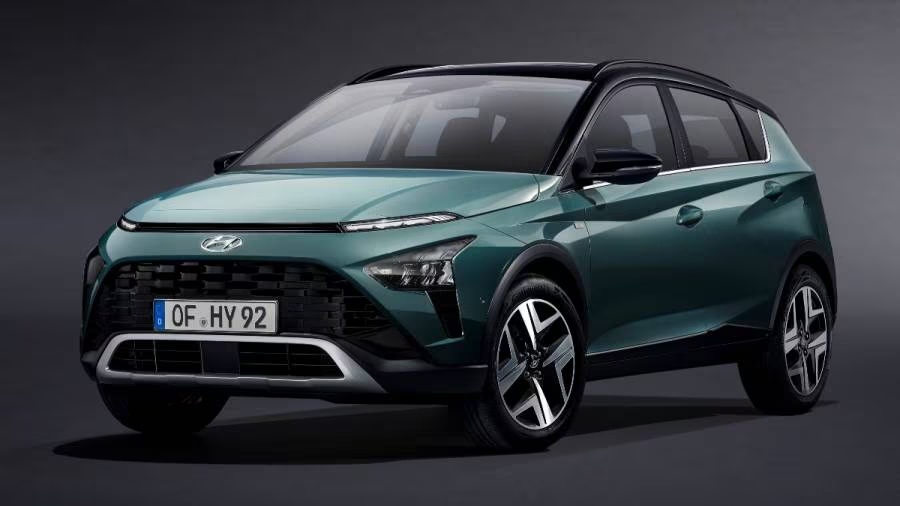
The Hyundai Bayon made its world debut at the 2026 Paris Motor Show on October 12, with India’s launch confirmed for October 26. The Hyundai Bayon specs India picture confirms a 1.5-litre MPi naturally aspirated petrol engine producing 115 PS and 144 Nm, paired with a 6-speed manual or Intelligent Variable Transmission (IVT) automatic.
The headline package adds dual 12.3-inch curved screens on an NVIDIA-powered ccNC cockpit, a generative AI voice assistant running Perplexity AI and SoundHound AI, Level 2 ADAS, and over-the-air updates for up to 19 controllers. All of this arrives in an expected Rs 9-17.5 lakh window, making this one of the most technology-rich launches in the Indian midsize SUV segment in 2026.
What Makes the Hyundai Bayon 2026 Specifications Stand Out?
The Hyundai Bayon 2026 specifications mark a clear shift in what the midsize SUV segment delivers at Rs 10-17 lakh. Hyundai positions the Bayon as an intelligent utility vehicle sitting between the sub-4m Venue and the 4.3m Creta.
The foundation is the Global K Enhanced Platform, engineered to meet five-star Indian safety standards under Bharat NCAP. What truly sets the Hyundai Bayon specs India apart is the software-defined vehicle technology philosophy built into the car.
OTA updates across 19 vehicle controllers, an NVIDIA-powered infotainment architecture, and generative AI integration are features Indian buyers associate with cars above Rs 20 lakh. The Bayon delivers this stack to the Hyundai SUV India market at a fraction of that price point.
Hyundai Bayon Engine Specifications India
1.5-Litre MPi Naturally Aspirated Petrol Engine
The Hyundai Bayon engine specifications India confirm a single petrol option: the 1.5-litre MPi four-cylinder petrol engine. It produces 115 PS of power and 144 Nm of torque.
This is the same 1.5-litre naturally aspirated unit used in the Hyundai Creta petrol, giving buyers a proven engine with a documented reliability record. The Hyundai Bayon 115 PS engine specifications place it alongside the Mahindra XUV 3XO (110 PS) and close to the Tata Nexon turbo-petrol (120 PS).
No diesel variant is confirmed for the October 26 launch. A turbo-petrol has not been announced. Sources describe a factory CNG variant as likely, but Hyundai India has not officially confirmed CNG in the initial lineup. The Hyundai Bayon 1.5 litre petrol engine is the only confirmed powertrain as of October 13, 2026.
Hyundai Bayon Manual vs IVT Transmission
The Hyundai Bayon manual vs IVT transmission choice suits two distinct buyer profiles.
The six-speed manual transmission suits highway and enthusiast buyers who want driver engagement and maximum fuel efficiency. The Intelligent Variable Transmission (IVT) — Hyundai’s CVT-based automatic — targets urban commuters who prioritise smooth, clutch-free city driving.
Both transmissions drive the front wheels. Using the Creta 1.5 NA petrol as a benchmark, real-world buyers can expect approximately 14-16 km/l with the manual and 12-14 km/l with the IVT in mixed conditions. These are estimates pending official ARAI-certified mileage figures, which Hyundai will announce on October 26.
Hyundai Bayon Features and Specifications
The Hyundai Bayon features and specifications package is where this car separates itself from every rival in the Rs 9-17 lakh segment. The technology content, safety suite and connectivity ecosystem combine into a list that punches above its expected price.
Infotainment — Dual Screens, AI and the NVIDIA ccNC Cockpit
The dashboard centrepiece is a dual 12.3-inch curved display setup: one digital instrument cluster and one touchscreen infotainment screen forming one continuous panel. This runs on an NVIDIA-powered ccNC cockpit architecture.
The generative AI voice assistant uses Perplexity AI integration for natural language commands covering navigation, climate, media and vehicle settings. A driver can speak in plain sentences without following a fixed command syntax.
SoundHound AI voice technology handles 500+ embedded voice commands that work fully offline in English, Hindi, Hinglish, Tamil, Bengali and Telugu. This multilingual infotainment system operates without a data connection, covering the language diversity of India’s car-buying population.
Wireless Android Auto and Apple CarPlay also feature alongside the embedded AI system. Understanding the full potential of connected car technology helps buyers appreciate how far ahead the Bayon’s cabin sits versus rivals at this price.
Connectivity — Hyundai Bluelink and OTA Updates
Hyundai Bluelink connected features deliver 70+ functions including remote engine start, remote AC control, geo-fencing, trip data logging, location tracking and SOS emergency assistance.
The standout long-term feature is over-the-air vehicle updates covering up to 19 separate controllers. Software bugs, ADAS calibration improvements and feature additions arrive wirelessly. Buyers do not need a dealership visit for system updates. This is the defining trait of software-defined vehicle technology, and its presence at Rs 10-17 lakh is unprecedented in the Indian market.
Comfort and Interior Features
Confirmed interior features include automatic climate control with vertical AC controls, a wireless phone charger, two front USB Type-C ports, an auto-dimming rear-view mirror, customisable drive modes and an electronic parking brake with auto-hold.
Features expected but pending official variant-wise confirmation include ventilated front seats, a panoramic sunroof and a Bose premium sound system. The logoless steering wheel and premium material selection throughout the cabin create a feel significantly above the expected entry price.
Official variant details and which features appear at each trim level will be published on October 26. Buyers should treat unconfirmed features as aspirational until the spec sheet is released.
Safety — Level 2 ADAS, Six Airbags and the Safety Platform
Level 2 ADAS is expected on top trims, covering adaptive cruise control, lane keep assist, forward collision warning and automatic emergency braking. A 360-degree surround-view camera is anticipated on the top variant.
Six airbags are expected as standard across all variants. Front and rear parking sensors, electronic stability control, hill hold assist and tyre pressure monitoring feature across the range. Front and rear disc brakes appear on upper trims.
The Global K Enhanced Platform targets five-star Indian safety standards. However, Hyundai India has not submitted the Bayon for Bharat NCAP testing as of October 13, 2026. Engineering to a safety target and earning a verified NCAP rating are not the same thing — buyers should note the distinction.
Hyundai Bayon Dimensions and Features
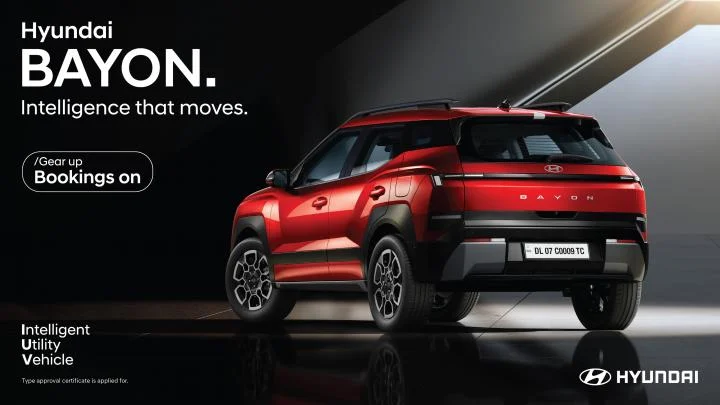
The Hyundai Bayon dimensions and features picture is partially confirmed. Hyundai officially stated a 4.2-metre body length at the global reveal. Width, height, wheelbase and boot capacity figures have not been officially announced ahead of October 26.
The 4.2m length places the Bayon clearly above the sub-4m Tata Nexon (3.99m) and Mahindra XUV 3XO (3.99m), implying a larger cabin and boot — though exact internal dimensions are pending. It sits below the 4.37m Kia Seltos, keeping the Bayon in its own distinct bracket.
Exterior highlights include the H-Edge front lighting signature: LED daytime running lights mounted high and the main headlamp cluster mounted low. Connected LED tail lights stretch across the full width of the boot lid. The car runs on 17-inch geometric alloy wheels fitted with 215/55 R17 tyres. Prominent wheel arch cladding adds visual SUV stance to the profile. Official colour options have not been announced.
Hyundai Bayon Specs India vs Rivals — How It Compares
To understand how Hyundai Bayon specs India stacks up against the competition, here is a direct comparison with the three most relevant rivals at this price point.
| Feature | Hyundai Bayon | Tata Nexon | Mahindra XUV 3XO | Kia Seltos |
|---|---|---|---|---|
| Length | 4.2m (official) | 3.99m | 3.99m | 4.37m |
| Engine | 1.5L MPi NA Petrol | 1.2T Petrol/Diesel | 1.2T Petrol | 1.5L Petrol/Diesel |
| Power | 115 PS | 120 PS | 110 PS | 115-160 PS |
| Transmission | 6MT / IVT | 6MT / AMT / DCT | 6MT / AMT | 6MT / 6AT / DCT |
| AI Infotainment | Perplexity + SoundHound | No | No | No |
| ADAS | Level 2 | Level 2 | Level 2 | Level 2 |
| OTA Updates | Yes (19 controllers) | Partial | No | Partial |
| Expected Price | Rs 9-17.5L (est.) | Rs 8.10L | Rs 7.99L | Rs 10.89L |
All prices ex-showroom. Hyundai Bayon price is estimated pending October 26 official announcement.
The Bayon leads on AI infotainment depth — Perplexity AI and SoundHound offline multilingual voice are segment-exclusive. OTA updates across 19 controllers give the Bayon a long ownership advantage no rival matches. The 4.2m body delivers a physically larger cabin than the Nexon and XUV 3XO.
The weaknesses are equally clear. Neither the Hyundai Venue nor the Bayon carries a confirmed Bharat NCAP rating, while the Nexon holds a verified five-star score. The Kia Seltos and Tata Nexon offer diesel variants the Bayon does not match at launch. The Nexon’s established service network trust, built over years of ownership data, is not something a new nameplate replicates immediately.
Tips for Buyers Researching Hyundai Bayon Specs India
Wait for the October 26 variant-wise spec sheet. The full Hyundai Bayon specs India breakdown across all trims only becomes clear on launch day. Key features including the panoramic sunroof, ventilated seats and 360-degree camera are expected but unconfirmed at any specific price point. Booking before the sheet is published risks a mismatch.
Choose the IVT for city driving, manual for highways. The 1.5L NA engine with IVT delivers smooth urban commuting. The six-speed manual suits highway-heavy buyers who want better fuel efficiency and more driver engagement.
Test the AI voice features at the dealership before picking a trim. Perplexity AI and SoundHound’s offline multilingual commands are segment-firsts. Real-world accuracy in Indian accents and noisy conditions is worth verifying on a showroom car before committing to the top trim.
Factor OTA updates into your ownership horizon. A car that receives improvements across 19 controllers wirelessly improves over time. Most rivals freeze at their launch software state. For buyers keeping cars five years or more, this is a genuine long-term ownership advantage.
Compare the top Bayon trim against the Kia Seltos base. At Rs 14-17 lakh, the Bayon top trim price overlaps with Kia Seltos 2026 entry pricing, which offers turbo-petrol, diesel and a more established service record. That comparison will decide many buyers’ final choice at the upper price range.
FAQ — Hyundai Bayon Specs India: People Also Ask
What are the Hyundai Bayon specifications in India?
The confirmed Hyundai Bayon specifications in India include a 1.5-litre MPi naturally aspirated petrol producing 115 PS and 144 Nm, available with a 6-speed manual or IVT automatic, a 4.2m body on the Global K Enhanced Platform, dual 12.3-inch curved displays, Level 2 ADAS on top trims, and Bluelink connectivity with OTA updates for 19 controllers. Official pricing and the full variant-wise specification list will be announced on October 26, 2026.
What is the Hyundai Bayon 1.5 litre petrol engine output?
The Hyundai Bayon 1.5 litre petrol engine produces 115 PS and 144 Nm from a four-cylinder naturally aspirated MPi unit. This is the same engine family used in the Hyundai Creta 1.5 petrol. Both the 6-speed manual and IVT automatic transmissions are available. No diesel has been confirmed. A CNG variant is described as likely by automotive sources but has not been officially announced.
Does the Hyundai Bayon get Level 2 ADAS in India?
Level 2 ADAS is expected on top trims, covering adaptive cruise control, lane keep assist, forward collision warning and automatic emergency braking. A 360-degree surround-view camera is anticipated on the top variant but remains unconfirmed. Six airbags are expected standard across all variants. The Global K Enhanced Platform targets five-star Indian safety standards, though Bharat NCAP testing and a rating are still pending.
What is the difference between Hyundai Bayon manual vs IVT transmission?
The Hyundai Bayon manual vs IVT transmission choice separates into two buyer profiles. The 6-speed manual suits highway drivers seeking engagement and fuel efficiency. The IVT is Hyundai’s CVT-based automatic, calibrated for smooth low-effort city driving with no gear changes. Both options are front-wheel drive. ARAI-certified mileage figures for both will be announced at the October 26 India launch.
How do the Hyundai Bayon 2026 specifications compare to the Tata Nexon?
The Hyundai Bayon 2026 specifications place the car at 4.2m — larger than the Nexon’s sub-4m body — with segment-exclusive Perplexity AI infotainment, SoundHound offline multilingual voice and OTA updates for 19 controllers the Nexon does not offer. The Nexon counters with a confirmed five-star Bharat NCAP rating, diesel and turbo-petrol options, a lower starting price of Rs 8.10 lakh, and a larger established service network. The price gap between the two will determine how many Nexon intenders the Bayon can convert.
Hyundai Bayon Specs India: The Software Is the Spec Sheet
The Hyundai Bayon specs India story has two distinct layers.
The powertrain layer is familiar. The proven 1.5L MPi petrol with IVT is the same engine family Indian buyers already know from the Creta, and it will perform exactly as the segment expects.
The technology layer is not familiar at this price. An NVIDIA-powered ccNC cockpit, Perplexity AI for conversational commands, SoundHound offline multilingual voice in six languages, and OTA updates across 19 controllers — Indian buyers were paying Rs 25-30 lakh to access this stack just two years ago.
The caveat is real. No Bharat NCAP rating exists yet. No diesel arrives with the launch lineup. October 26 pricing will reveal whether Hyundai has priced the Hyundai Bayon specs India package to compete aggressively or to maximise the technology premium.
If the base trim lands below Rs 10 lakh and the top trim stays under Rs 15 lakh, the value case is compelling. If the top trim crosses Rs 17 lakh, the Kia Seltos comparison becomes unavoidable.
The Bayon’s spec sheet belongs in a car that costs more — October 26 will show whether Hyundai priced it to match.