The Hyundai Bayon is officially coming to India, with bookings already open at Rs 11,000 and an October 2026 festive-season launch confirmed. Positioned at approximately 4.2 metres in length, the Hyundai Bayon slots neatly between the sub-4m Venue and the 4.3m Creta in Hyundai’s India lineup. Built on the Global K Enhanced Platform with a dual-screen dashboard, embedded generative AI voice assistant, and expected Level 2 ADAS, this midsize SUV is shaping up to be one of the most feature-packed launches of 2026. Here is everything Indian buyers need to know.
What Is the Hyundai Bayon and Why Does It Matter?
The Hyundai Bayon nameplate is new to India. Hyundai positions it as an intelligent utility vehicle, designed to fill the gap between the sub-4m Venue and the larger Creta in a segment that has become India’s most fiercely contested price band. At approximately 4.2 metres, it is longer than rivals like the Tata Nexon and Mahindra XUV 3XO while remaining more accessible than the Kia Seltos.
Hyundai’s strategic intent is clear: the brand wants to recapture market share in the Rs 10-15 lakh midsize SUV space, where the Nexon, XUV 3XO and Seltos currently dominate. The Global K Enhanced Platform that underpins the Bayon is engineered for five-star Indian safety standards, signalling that Hyundai is not treating this as a budget filler but as a serious product built for India’s increasingly demanding safety-conscious buyer. The Bayon also marks Hyundai’s first model above 4 metres with a CNG option, which opens the door to a large fleet and practical-use buyer base.
Hyundai Bayon Features and Specifications
Exterior Design: Hyundai Art of Steel Meets the Indian Market
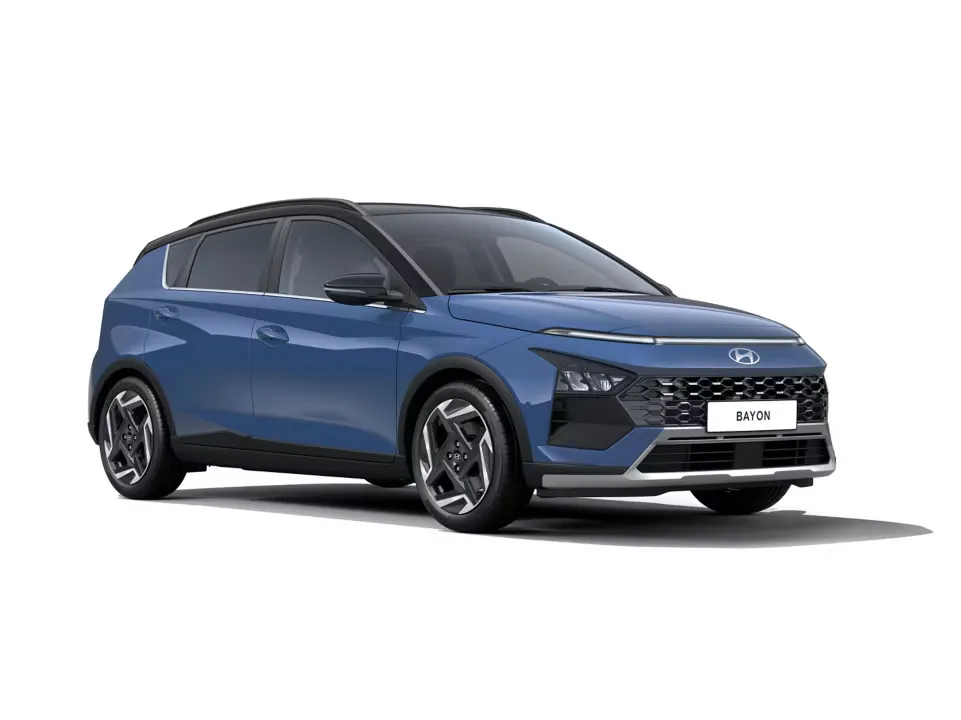
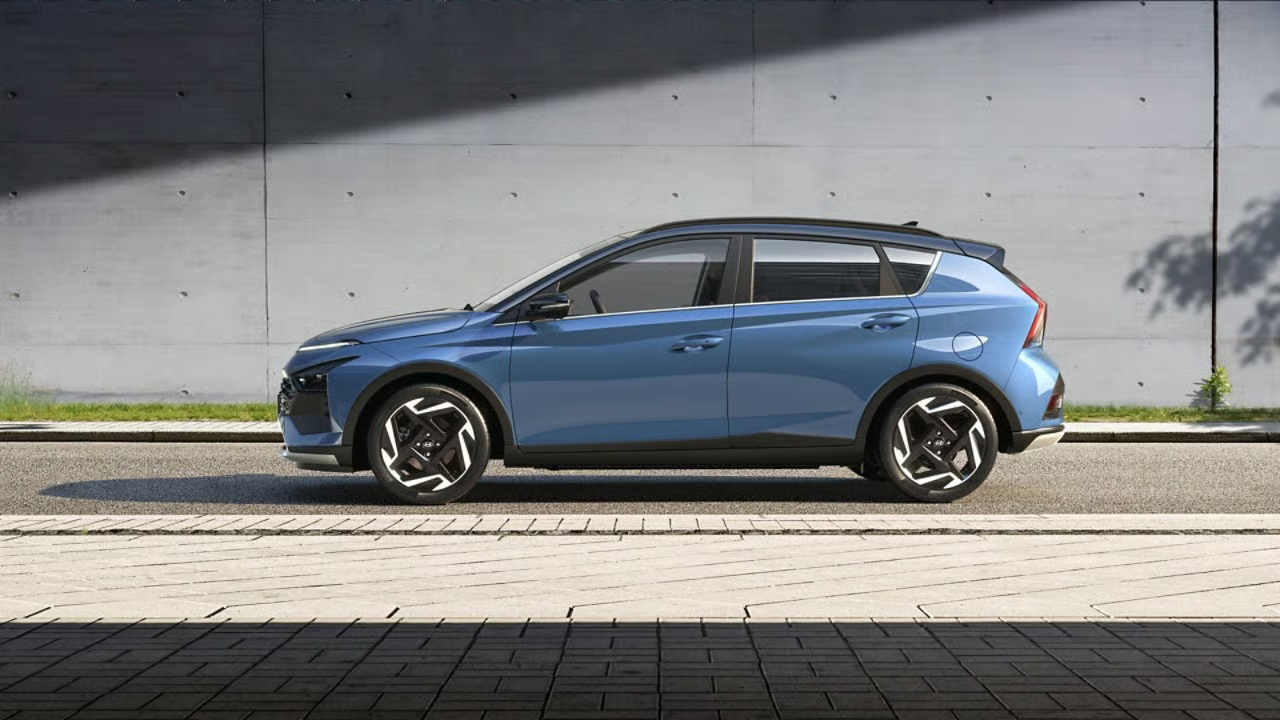
The Hyundai Bayon carries a design language Hyundai calls the Art of Steel approach, translated into a sharp crossover silhouette with unmistakable front-end graphics. The H-Edge front lighting splits the headlamp into a high-mounted LED daytime running lights strip and a low-mounted main headlamp cluster, giving the front a layered, wide-set look.
At the rear, connected LED tail lights stretch across the full width of the boot lid, forming a light bar similar to what buyers have come to expect from the Creta facelift. The 17-inch geometric alloy wheels fill out 215/55 R17 rubber and are flanked by prominent wheel arch cladding that adds SUV stance to what is otherwise a relatively sleek profile. Pull-type door handles and clean flanks complete a design that reads as premium for the segment without trying to mimic any specific global model.
Interior and Technology
Step inside the Bayon and the cabin immediately communicates that Hyundai has invested heavily in perceived quality. Twin 12.3-inch screens form a curved dual-screen dashboard, with the infotainment and driver’s display merged into one flowing panel. This setup, borrowed from the next-generation i20 architecture, is a direct answer to the Nexon’s 12.3-inch display and the XUV 3XO’s dual-screen cabin.
The embedded generative AI voice assistant is the headline interior feature. Unlike smartphone-mirrored assistants, it works independently of the user’s phone and responds to natural language commands for navigation, climate, media and vehicle settings. The vertical AC control panel below the screens keeps the cockpit uncluttered, while the logoless steering wheel adds a premium visual touch. Wireless phone charging, ventilated front seats (expected on top trims) and automatic climate control round out the comfort features.
A panoramic sunroof is expected on the higher variants, and connected car technology features including remote commands, geo-fencing and trip data are built into the Bayon’s infotainment ecosystem via Hyundai’s BlueLink-equivalent connected car platform.
Safety: Level 2 ADAS and Six Airbags
The Global K Enhanced Platform brings serious safety credentials. Six airbags are expected as standard across all variants, and the top trims are expected to carry a full Level 2 ADAS suite including adaptive cruise control, lane keep assist, forward collision warning and automatic emergency braking. A 360-degree surround-view camera is anticipated on the top variant, though Hyundai has not confirmed this officially.
Front and rear disc brakes feature on upper trims, with the platform specifically engineered to meet five-star Indian safety standards in the upcoming BHARAT NCAP regime. For a sub-Rs 15 lakh car, this is a strong safety promise and one that directly matches the Nexon, which already holds a five-star Bharat NCAP rating.
Hyundai Bayon Engine and Mileage
The Hyundai Bayon uses the familiar 1.5-litre naturally aspirated petrol engine that currently powers the Hyundai Creta. It produces approximately 115PS and 144Nm of torque, which is adequate for city and highway use in a car of this size and weight class. Transmission options include a 6-speed manual gearbox and the Intelligent Variable Transmission (IVT), Hyundai’s continuously variable automatic gearbox tuned for smooth city driving.
Official ARAI mileage figures are pending and will be announced at launch. Using the Creta 1.5 NA as a benchmark, real-world Indian buyers can expect approximately 14-16km/l on petrol with the manual gearbox and 12-14km/l with the IVT in mixed urban and highway conditions.
The CNG variant is expected to be a significant volume driver. Hyundai plans to use an underbody CNG tank — rather than a boot-mounted cylinder — to preserve cargo space. This would make the Hyundai Bayon the first Hyundai above 4 metres to offer factory-fitted CNG, targeting practical family buyers who want a larger car without the running cost of petrol. Real-world CNG mileage is estimated at 18-20km/kg based on the performance of Hyundai’s existing CNG engines in the Grand i10 and Aura. No diesel variant is confirmed, and a turbo-petrol remains unconfirmed as of the October 2026 launch timeline.
Hyundai Bayon Price in India and Variants
The Hyundai Bayon price in India has not been officially announced. Industry estimates place the ex-showroom range at Rs 10-15 lakh for the full variant spread. Smartprix estimates the base petrol variant could start as low as Rs 8.99-9.5 lakh, with mid trims at Rs 11-13 lakh and the fully-loaded top trim reaching Rs 14-15 lakh. On-road pricing adds 10-15% for road tax and insurance, putting the base on-road figure near Rs 11.5-12 lakh.
The Hyundai Bayon booking amount is Rs 11,000, payable online at hyundai.co.in or at any authorised Hyundai dealership. Booking at this stage does not lock in a price or variant; it secures a priority position in the allocation queue.
The Hyundai Bayon launch date in India is October 2026, with Hyundai timing the Hyundai Bayon 2026 launch for the Diwali buying window when consumer sentiment and financing offers are at their seasonal peak. Variant names have not been officially confirmed; entry, mid and top trims are expected, with ADAS limited to upper variants based on Hyundai’s current lineup strategy. The Hyundai Bayon expected price of Rs 10-15 lakh makes it competitive but also sets up a direct collision with established names at every price point. Hyundai Bayon variants and price details will become clearer at the official reveal.
According to Business Today’s Hyundai Bayon booking report, dealers are already following up with customers on allocation timelines and test drive schedules.
Hyundai Bayon vs Rivals: How It Compares
To understand where the Hyundai Bayon sits in the segment, here is a direct comparison with its four key rivals: the Tata Nexon, Mahindra XUV 3XO, Kia Seltos and Hyundai Venue. Note that Bayon pricing is estimated and pending official confirmation.
| Feature | Hyundai Bayon | Tata Nexon | Mahindra XUV 3XO | Kia Seltos | Hyundai Venue |
|---|---|---|---|---|---|
| Length | ~4.2m | 3.99m | 3.99m | 4.37m | 3.99m |
| Engine | 1.5L NA Petrol | 1.2T Petrol/Diesel | 1.2T Petrol | 1.5L Petrol/Diesel | 1.2T Petrol |
| Power | ~115PS | 120PS | 110PS | 115-160PS | 83-120PS |
| ADAS | Level 2 (expected) | Level 2 | Level 2 | Level 2 | No |
| Starting Price | Rs 10L (est.) | Rs 8.10L | Rs 7.99L | Rs 10.89L | Rs 7.94L |
| Sunroof | Expected | Yes | Yes | Yes | Yes |
| CNG option | Expected | Yes | No | No | Yes |
All prices ex-showroom; Hyundai Bayon price is estimated pending official announcement.
The Bayon’s biggest advantages are its larger 4.2m footprint versus the sub-4m Nexon and XUV 3XO, its dual-screen cabin technology and the expected Level 2 ADAS. Against the Kia Seltos, which also starts at approximately Rs 10.89 lakh, the Bayon will need to justify its entry price with a richer standard feature list.
The weaknesses are equally clear. The Nexon and XUV 3XO have broader trim ladders, more established service network trust and in the Nexon’s case, a confirmed five-star Bharat NCAP rating. The Hyundai Creta, Hyundai’s own larger model, already offers everything the Bayon promises and more — which creates an internal cannibalism risk if Bayon pricing runs close to Creta entry level. The Venue comparison also matters: buyers trading up from the Venue will want clear segment differentiation to justify the higher spend.
Tips for Indian Buyers Considering the Hyundai Bayon
Book early at Rs 11,000. The festive season allocation at Hyundai dealerships tends to move fast. A booking token secures a priority position without locking the buyer into any variant or price commitment.
Wait for official variant-wise pricing before selecting a trim. The estimated Rs 10-15 lakh range is wide enough to span three or four distinct buying decisions. The mid trim with Level 2 ADAS is likely the value sweet spot, but that call is impossible to make without Hyundai’s confirmed price list.
Calculate on-road costs from the start. Adding 10-15% to the expected ex-showroom price means the base Bayon on-road in most states will start near Rs 11.5-12 lakh. Budget for first-year insurance, which on a new nameplate without historical data may price higher than established rivals.
CNG buyers should wait for official confirmation. The underbody CNG option is expected but unconfirmed as of October 2026. Do not book specifically for CNG without Hyundai officially announcing it in the launch variant list.
Compare the Bayon top trim against the Kia Seltos base. At Rs 14-15 lakh, the Bayon will sit close to the entry point of the Kia Seltos 2026, which offers a turbo-petrol, diesel and a more proven ownership track record. The comparison will decide which buyer gets more for their money at that price point.
Frequently Asked Questions
What is the Hyundai Bayon price in India?
The Hyundai Bayon price in India has not been officially announced. Estimates place the ex-showroom range at Rs 10-15 lakh across all variants. The base petrol may start near Rs 9-10 lakh and the top trim could reach Rs 14-15 lakh. Bookings are open at Rs 11,000, with official pricing expected at the October 2026 launch.
What is the Hyundai Bayon launch date in India?
The Hyundai Bayon launch date in India is October 2026, timed for the festive and Diwali buying season. Hyundai India has confirmed the nameplate and opened bookings ahead of the official launch event. Deliveries are expected to begin shortly after the reveal.
What engine does the Hyundai Bayon get?
The Hyundai Bayon uses a 1.5-litre naturally aspirated petrol engine producing approximately 115PS and 144Nm, paired with either a 6-speed manual or an IVT automatic. A CNG variant is expected but not yet officially confirmed. No diesel or turbo-petrol has been announced.
Does the Hyundai Bayon get ADAS?
Level 2 ADAS is expected on the top trims of the Hyundai Bayon, covering adaptive cruise control, lane keep assist, forward collision warning and automatic emergency braking. Six airbags are expected as standard across variants. A 360-degree camera is anticipated on the top variant but remains unconfirmed.
How does the Hyundai Bayon compare to the Tata Nexon?
The Hyundai Bayon is longer at approximately 4.2 metres versus the Nexon’s sub-4m body, offering a larger cabin footprint. It is expected to match or exceed the Nexon on in-cabin technology with its dual-screen dashboard and AI voice assistant. The Nexon, however, starts at a lower Rs 8.10 lakh ex-showroom, carries a confirmed five-star Bharat NCAP rating, and has a more established service network. The price gap between the two will determine how many Nexon buyers the Bayon can realistically convert.
Hyundai Bayon: Big on Promise, But the Price Tag Will Decide Everything
The Hyundai Bayon arrives with a specification sheet that reads better than anything in its expected price band. The Global K Enhanced Platform, dual 12.3-inch screens, embedded generative AI voice assistant, Level 2 ADAS and an expected CNG variant add up to a genuinely well-equipped package. For a car priced at Rs 10-15 lakh, that is a serious list.
The risk sits entirely with pricing. At Rs 10-11 lakh ex-showroom for the base, the Bayon enters a market where the Nexon and XUV 3XO are already trusted names with proven NCAP ratings and wide service networks. At Rs 13-15 lakh for the top trim, it must justify itself against the Kia Seltos, which has a turbo-petrol, a diesel and years of ownership data behind it.
The Hyundai Bayon spec sheet writes a very good story. October 2026 will tell Indian buyers whether the price tag matches it.