The Ather Konarc electric scooter is about to change the conversation around affordable two-wheelers in India. Debuting on August 29, 2026, at Ather Community Day in Bengaluru, it marks Ather’s most significant product move since the 450 series — a family-oriented machine built on the all-new Ather EL platform, with metal body panels and a price bracket the brand has never played in before. Among the upcoming EV scooters 2026, this one carries the most weight for Ather as a company. Ather has confirmed the name, the launch date, the platform, and the metal body. Everything else — price, battery capacity, exact range — remains officially unannounced until August 29.
What Is the Ather Konarc?
Every scooter Ather has sold — the 450, the 450X, the Rizta — targets buyers who already know they want a premium electric two-wheeler. This one takes a different brief entirely.
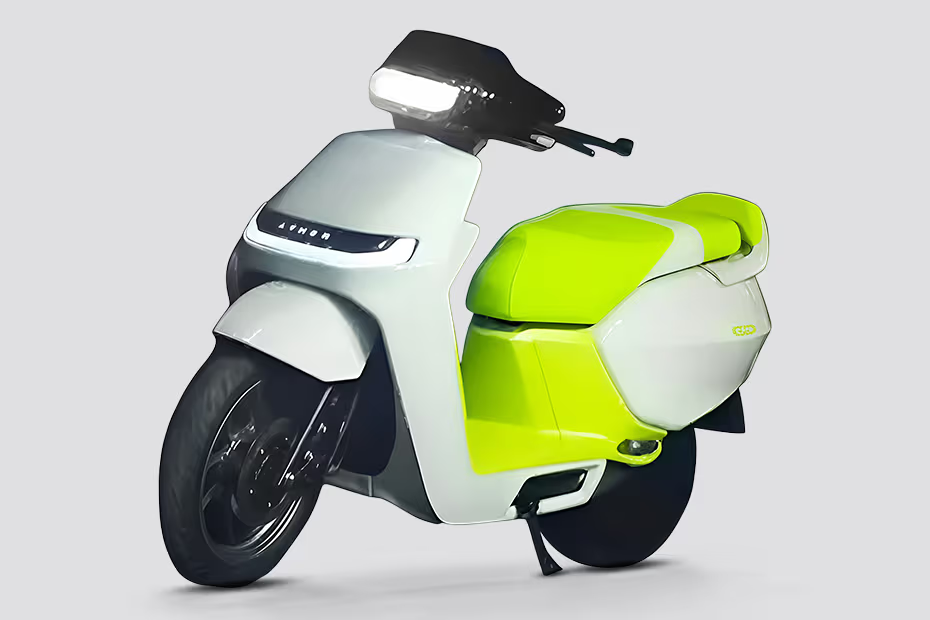
The Ather Konarc is Ather’s first production model on the Ather EL platform, a new architecture developed using over 26 lakh kilometres of real-world field data. The platform is scalable — it supports different battery sizes, body styles and price points, making this the first of what could become a full EL-based family. Unlike the angular proportions of the 450 range, the Konarc wears conventional, practical bodywork suited to a family electric scooter buyer rather than a performance enthusiast.
It rides on a 14-inch front and 12-inch rear alloy wheel, uses metal body panels — a first for any Ather — and is shaped around two-up comfort. CEO Tarun Mehta has positioned it squarely in the high-volume commuter segment, where Bajaj and TVS currently dominate and where the 450 series was never designed to compete.
Ather Konarc Launch Date — What to Expect on August 29
The Ather Konarc launch date is August 29, 2026. The reveal takes place at Ather Community Day in Bengaluru — the brand’s annual event used previously to announce platforms, partnerships and new products.
Production has reportedly already begun at Ather’s manufacturing facility ahead of the launch. That is a meaningful signal: production-before-launch typically means deliveries can follow the unveiling quickly, rather than months later. Buyers won’t necessarily face the booking-to-delivery gaps that slowed earlier EV launches in India.
The full specification sheet, variant lineup, prices and booking details are expected on August 29. Until then, every figure online is either officially confirmed (metal body, EL platform, wheel sizes, braking setup) or pre-launch speculation (price, range, variants). Some outlets are reporting both categories interchangeably — which matters more than it sounds when making a purchase decision.
Ather Konarc Price in India — Here’s the Catch
The Ather Konarc price in India has not been officially announced. That is the single most important thing to understand before any comparison or booking decision.
Multiple outlets — Autocar India, ZigWheels, BikeWale — cite an expected ex-showroom range of ₹1 lakh to ₹1.25 lakh. One aggregator (BikeDekho) has speculated a base as low as ₹99,000. These figures reflect competitive positioning and analyst estimates, not any Ather statement. For context on electric scooter India pricing at this segment, the Ather Rizta S — the current most affordable Ather — starts at ₹1.21 lakh.
A Battery-as-a-Service (BaaS) option is also reportedly under consideration, potentially allowing buyers to own the scooter body and subscribe to battery access separately — pushing effective upfront cost below ₹1 lakh. Unconfirmed. The Konarc needs to undercut or match entry-level TVS iQube and Bajaj Chetak prices to genuinely move the needle. How close Ather gets to that target will define August 29.
Design and Build — Why the Metal Body Matters
Metal Panels vs Ather’s Usual Plastic Body
Every Ather sold until now uses composite polymer body panels. The Ather Konarc breaks that pattern. CEO Tarun Mehta confirmed the metal body in a teaser video where magnets visibly adhered to the scooter’s exterior — about as unambiguous as a confirmation gets pre-launch.
Being a metal body electric scooter matters specifically in this price segment. Buyers making their first switch from a petrol scooter associate metal panels with durability and substance. The Bajaj Chetak already uses steel bodywork, and it has been a genuine differentiator in sales. One caveat: it remains unclear whether the entire exterior or only select sections use metal. Selective use would help Ather manage weight, since metal panels add mass over plastic equivalents — which affects range and handling.
Floorboard, Seating and Family-Friendly Touches
The Konarc’s silhouette centres on a wide, flat floorboard — practical for bags or groceries — and a long single-piece seat designed for comfortable two-up riding. Teaser images show a handlebar-mounted headlight and a full-width LED DRL on the apron, giving the scooter a familiar, conventional look that first-time EV buyers will immediately recognise.
Suspension is telescopic fork up front, monoshock at the rear, tuned for compliance rather than performance. That is a deliberate departure from the 450X’s stiffer, sportier setup.
Ather Konarc Range and Battery Capacity — Claims vs Confirmation
The Ather Konarc range and Ather Konarc battery capacity figures generating excitement are almost entirely unofficial. Worth separating confirmed from leaked.
Confirmed: The Ather EL platform supports packs from 2 kWh to 5 kWh. The Konarc uses a mid-range pack from within that window. The swingarm-mounted motor is expected to derive from the 450 series, retuned for smooth city performance rather than outright acceleration.
Unconfirmed (Team-BHP/BikeDekho leak): Four IDC range options — 100 km, 125 km, 160 km and 200 km — across the variant lineup. A new battery family reportedly called ‘Bedrock.’ None verified by Ather.
The 200 km IDC figure would be competitive, but IDC and real-world range diverge meaningfully. In Indian conditions — heat, traffic, full payload — real-world figures typically run 15 to 25 percent below IDC claims. A 160 km IDC rating likely translates to 120–135 km in daily use. A built-in 450W charger is reportedly standard, with a combined 900W fast-charge option cutting 0–100% charge time to roughly two hours. All unconfirmed until launch.
Ather Konarc Features
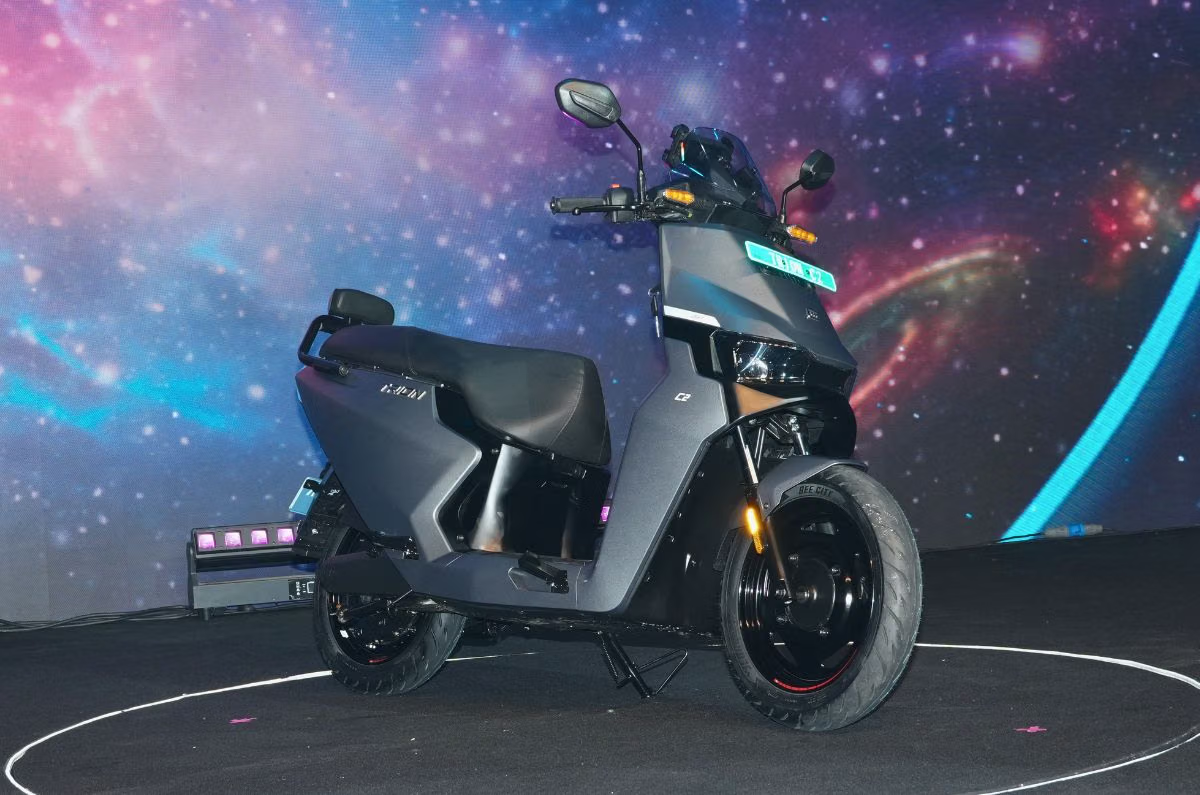
The Ather Konarc features that are confirmed: a TFT instrument console and AtherStack 7 — the same software platform running on the Rizta and 450 series.
Expected but not officially confirmed at launch: independent turn-by-turn navigation (no tethered smartphone required), voice commands, pothole detection, crash and tow alerts, and call and SMS notifications via Bluetooth. These sit within the AtherStack 7 OTA ecosystem — even if absent at launch, they can arrive via software update.
Other likely features based on platform architecture: multiple riding modes, reverse mode, hill-hold assist, and a walk-assist function reportedly called ‘Airwalk’ in the Team-BHP leak. Service intervals are expected at one year or 10,000 km, consistent with existing Ather models. The 450X’s low service cost record is a real ownership advantage, and Ather will want the Konarc to carry that reputation into the commuter segment.
Ather Konarc vs TVS iQube vs Bajaj Chetak — How It Stacks Up
Before the Ather Konarc vs TVS iQube and Ather Konarc vs Bajaj Chetak comparison can be settled, buyers need official specs. The table below uses confirmed data for rivals and pre-launch estimates for the Konarc — marked clearly.
| Spec | Ather Konarc (Expected) | TVS iQube | Bajaj Chetak |
|---|---|---|---|
| Price (ex-showroom) | ₹1.00–1.25L* | ₹1.11–1.62L | ₹96,400–1.34L |
| Platform | EL (new) | Proprietary | Proprietary |
| Body panels | Metal* | Mostly plastic | Metal (steel) |
| IDC Range | Up to 200 km* | Up to 212 km | Up to 153 km |
| Battery | 2–5 kWh range* | 2.2–5.3 kWh | 2.9–3.5 kWh |
| Charging | 450W + 900W combo* | External charger | External charger |
| Connectivity | AtherStack 7 (TFT)* | SmartXonnect | Chetak app |
| Status | Launches Aug 29, 2026 | Available now | Available now |
*Pre-launch estimates. Verify at atherenergy.com/konarc after August 29.
The Bajaj Chetak leads on affordability at ₹96,400 and already brings the steel body that the Konarc is matching. The TVS iQube competes harder mid-range with a mature connected ecosystem and a 212 km IDC top variant — though the base 2.2 kWh version only delivers around 75 km real-world. As an electric two wheeler in this segment, the Konarc needs to beat both on price, tech, and build confidence simultaneously — not just one dimension.
Tips — What to Do Before the Konarc Launches
Wait for the official spec sheet. Every range and price figure in circulation is a pre-launch estimate. Do not book on unconfirmed numbers.
Compare on-road, not ex-showroom. RTO registration, insurance and TCS charges typically add 10–15 percent above ex-showroom in most Indian cities.
Evaluate the BaaS option carefully. If offered, Battery-as-a-Service lowers upfront cost but adds a monthly subscription. Total ownership cost over three to five years matters more than the sticker price.
Test-ride before committing. The Konarc’s softer suspension and metal bodywork will feel distinctly different from the 450X or even the Rizta. Don’t assume the ride character carries over.
Check the existing Ather Rizta. It starts at ₹1.21 lakh and is available now with a proven feature set. If the Konarc launches above ₹1.15 lakh, the waiting premium may not be worth it for all buyers.
Frequently Asked Questions
When will the Ather Konarc launch in India?
The Ather Konarc launch date is August 29, 2026, at Ather Community Day in Bengaluru. Deliveries are expected to follow shortly after, as production has reportedly already begun at the manufacturing facility.
What is the expected Ather Konarc price in India?
No official price has been announced. Industry sources cite ₹1 lakh to ₹1.25 lakh ex-showroom as the expected range, with one aggregator speculating a ₹99,000 base. All figures are unconfirmed until August 29.
What is the Ather Konarc’s expected range?
A pre-launch leak via Team-BHP suggests IDC-certified range options of 100 km, 125 km, 160 km and 200 km across variants. Ather has not confirmed any range figure. Real-world numbers will run 15–25 percent below IDC claims in typical Indian use.
Is the Ather Konarc body made of metal?
Yes — confirmed by CEO Tarun Mehta via a teaser video. It becomes the first Ather electric scooter to use metal body panels, moving away from the composite polymer bodywork on the 450 and Rizta lines. Whether all panels or select sections are metal remains unclear.
Ather Konarc vs TVS iQube — which should buyers choose?
A firm verdict needs official Konarc specs. The TVS iQube is available now, proven, and backed by a wide service network — a safe choice for buyers who can’t wait. Those with four days of patience have strong reasons to hold on for the full picture on August 29.
The Real Test Starts After August 29
Ather has the platform, the software depth, and the manufacturing momentum to make the Konarc a genuine force in India’s most competitive electric scooter segment. But the Rizta showed that strong technology alone doesn’t crack the mass market when the price sits too high.
The Ather Konarc’s actual market impact comes down to one number: the starting price. A usable-range variant genuinely at or near ₹1 lakh turns the EL platform into a real disruption. Anything consistently above ₹1.10 lakh and the Konarc risks repeating the Rizta’s story — respected, reviewed well, but bought by a fraction of the buyers it could reach.