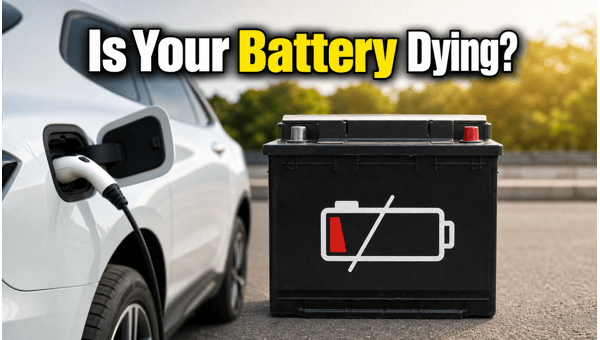
India sold over 1.6 million electric vehicles in FY2024-25, making battery ownership a mainstream reality for the first time. As the EV fleet grows, proper EV battery maintenance is the single most important habit an Indian EV owner can build — yet it remains the least understood aspect of EV ownership.
Unlike petrol cars where servicing means oil changes and air filters, an electric vehicle battery loses capacity silently. Neglect it, and range drops progressively, battery health deteriorates ahead of schedule, and replacement costs run ₹3–8 lakh. This guide covers India-specific habits that slow degradation and extend electric car range across 8–10 years.
Why EV Battery Maintenance Matters — The Science of Battery Degradation
An electric vehicle battery pack is a lithium ion battery assembly — hundreds of individual cells arranged in modules, each holding charge through electrochemical reactions between lithium ions and electrode materials. Capacity loss is built into the chemistry: every charge-discharge cycle causes microscopic structural changes in cell electrodes that reduce holding capacity. This gradual, irreversible loss is called battery degradation, and it happens in every lithium-ion cell — the only variable is the rate.
ARAI-certified range figures give buyers a baseline, but real-world battery health tells a different story over time. Under normal usage, most modern EV batteries lose 2–3% of capacity per year, retaining approximately 70–80% after 8 years. India-specific accelerators include peak summer temperatures of 40–48°C, frequent DC fast charging on highway routes, deep discharge below 10% SOC, and inconsistent grid voltage in smaller cities.
How to Maintain EV Battery — Daily Charging and Usage Habits
The golden rule of EV ownership: keep the battery State of Charge (SOC) between 20% and 80% for daily use. At the extremes — near 0% and near 100% — lithium-ion cells experience elevated voltage stress that accelerates chemical degradation. Good EV battery maintenance begins with the 20–80% rule, which every major OEM recommends in India owner handbooks. Tata Motors, Hyundai India, and MG India all include charge limit settings in their companion apps to enforce this window.
The daily routine: plug in overnight and set the charge limit to 80% via the vehicle app or the charger itself. Avoid leaving the battery at 100% for extended periods unless a long trip follows immediately. A 100% charge before a highway run is perfectly safe — it is the habit of daily 100% charges that accumulates voltage stress over months. Tata.ev app users on the 2024 Nexon EV can set this limit directly from a phone.
How to Increase EV Battery Life Through Smart Charging
The 2024 Tata Nexon EV, Hyundai Ioniq 5, and MG ZS EV all include in-car charge limit settings in the vehicle menu — set this to 80% for all routine charging. Track ARAI-certified range versus real-world range monthly: a 10%+ gap in normal conditions signals measurable battery degradation — request an OEM diagnostic before warranty closes.
How to Improve Electric Car Battery Life Through Usage Habits
Driving behaviour affects cycle count as much as charging habits do. Smooth acceleration over aggressive launches reduces peak current draw that stresses battery cells. Selecting the highest regenerative braking mode in city traffic — B mode on the Nexon EV or i-Pedal on the Ioniq 5 — recovers energy and reduces brake use. Running Eco mode in stop-start urban conditions lowers peak power demand and reduces full charge cycle accumulation.
EV Battery Charging Best Practices — What Indian Owners Must Know
Three charging levels define Indian EV ownership: AC slow (3.3 kW overnight home), AC fast (7.2–22 kW Level 2 wallbox), and DC fast (50–150 kW at highway and mall stations). AC Level 2 home charging is the recommended daily EV charging method — it operates at a controlled rate, generates minimal heat, and places the least electrochemical stress on cells. Following EV battery maintenance principles for charging means treating DC fast charging as a travel tool, not a daily habit.
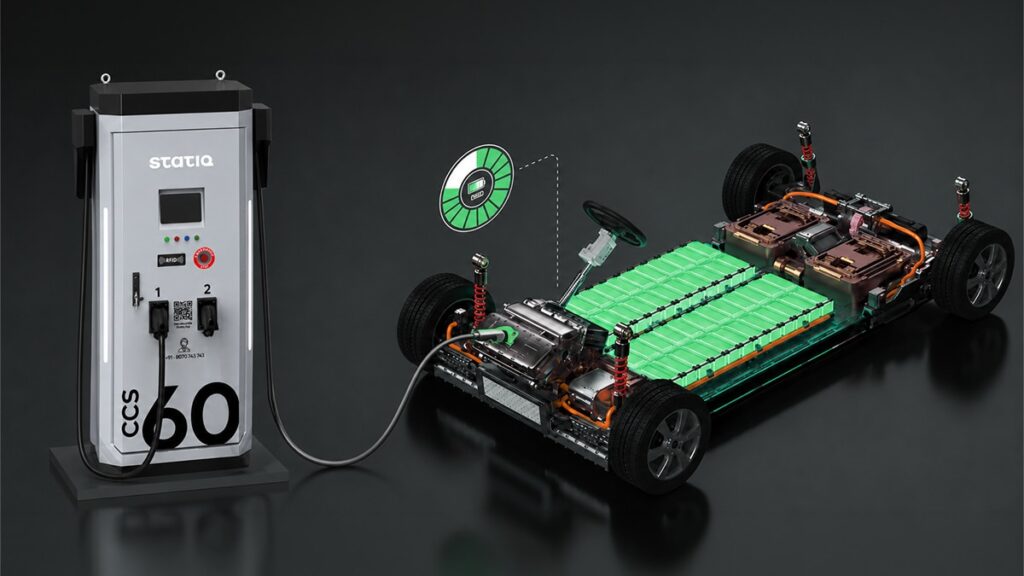
For DC fast charging, limit sessions to once or twice per week. Avoid plugging in between 12 PM and 4 PM in summer months when battery temperature peaks, and never connect immediately after a long drive while the pack remains warm from discharge.
Tata Motors formally advises Nexon EV owners to keep DC fast charging below 25% of total sessions. Hyundai’s Ioniq 5, with its 800V architecture and dedicated thermal management system, handles fast charging more gracefully than standard 400V platforms — relevant for Indian buyers relying on public highway DC chargers.
How to Protect EV Battery in India — Heat, Climate, and Local Conditions
Lithium-ion chemistry operates optimally at 15–35°C. India’s climate subjects EV batteries to temperatures outside this window for 4–6 months per year. EV battery maintenance in India requires season-specific adjustments that other markets rarely demand.
Summer (March–June): Park in covered or shaded areas to prevent the battery pack from absorbing radiant heat. Avoid DC fast charging between 12 PM and 4 PM. Use the pre-conditioning feature on the Tata Nexon EV, MG Windsor EV, and Kia EV6 — pre-cool the cabin while plugged into AC mains, not on battery power.
Monsoon (July–September): The Tata Nexon EV and Hyundai Ioniq 5 both carry IP67-rated battery enclosures. Deep water crossings above door-sill level and undercarriage pressure washing void this rating and risk damage to connectors and BMS components.
Winter (November–January, North India): Cold reduces lithium-ion chemical activity. Real-world electric car range drops 10–20% at 5–10°C. Pre-warm the battery using the scheduled preheat function in the Tata Connect or Hyundai BlueLink app before the first drive to restore full chemical activity and minimise range loss.
Good vs Harmful EV Battery Habits — Side-by-Side Comparison
Good EV battery maintenance habits versus harmful ones separate Indian EV owners who retain 85% range after 7 years from those who see degradation reach 70% in 5. The table below covers eight habits, their effect on lithium-ion chemistry, and the recommended practice for Indian conditions. For buyers comparing EV models before purchase, the best EVs under ₹15 lakh in India 2026 covers battery warranty terms across current options.
| Habit | Effect on Battery | Recommended Practice |
|---|---|---|
| Daily charge to 100% | Accelerates degradation | Set limit to 80% for daily use |
| Frequent DC fast charging | Increases heat, stresses cells | Max 1–2 sessions per week |
| Parking in direct sun (summer) | Raises battery temperature above 40°C | Use shade or covered parking |
| Deep discharge below 10% | Voltage stress on cells | Recharge at 20% SOC |
| AC Level 2 home charging | Lowest stress, minimal heat | Preferred daily method |
| Pre-conditioning on AC power | Cools or warms battery before use | Use before long trips and DC charging |
| Third-party unbranded chargers | Risk of voltage spikes to BMS | Use only BIS-certified chargers |
| Scheduled off-peak charging | Cooler ambient temperature | Set to charge 11 PM–6 AM |
Based on OEM guidance from Tata Motors, Hyundai India, and MG India (2024–2026).
EV Battery Maintenance Tips — Practical Checklist for Indian Owners
Six steps form the annual EV battery maintenance checklist every Indian owner should follow.
Schedule an annual battery health check. OEM service centres include a State of Health (SOH) assessment, cell balance check, and BMS diagnostic in the annual service package at no additional charge during the warranty period. Book it before the annual service window closes each year.
Apply OTA updates immediately when released. Tata Motors, Hyundai, and MG India push battery management improvements through over-the-air updates that recover 1–3% of effective range and improve thermal regulation. Leaving updates pending forfeits these gains.
Know the electric car battery maintenance cost before the warranty ends. BMS diagnostics: ₹0 under warranty, ₹1,500–₹5,000 outside. Module replacement: ₹80,000–₹2 lakh. Full pack: ₹3–₹8 lakh. The home EV charger installation guide India covers wallbox setup costs that cut DC fast-charging dependency.
Use only BIS-certified chargers. IS 16893 is the mandatory compliance standard for EV supply equipment in India. Third-party unbranded chargers risk voltage spikes that damage the BMS and may void warranty coverage.
Track monthly range against ARAI-certified figures. A 10%+ real-world drop under normal conditions signals measurable degradation. File a warranty SOH claim within the coverage period to maximise remediation options.
Pre-condition before DC charging sessions. Use the pre-conditioning function to cool the pack below 35°C on AC mains power before connecting to a DC fast charger — this measurably reduces heat-induced degradation per session.
How Long Does EV Battery Last in India? — Lifespan, Warranty, and Real-World Data
Modern lithium-ion EV battery packs target 1,000–1,500 full charge cycles as their design life. For an Indian owner covering 15,000–20,000 km per year charging to 80% daily, this translates to 8–12 years before degradation becomes operationally significant. OEM warranty benchmarks confirm this: Tata Motors and Hyundai India (8 years / 1.6 lakh km, 70% capacity floor), MG India (8 years / 1.5 lakh km), and Ola Electric (8 years / 1.5 lakh km).
Real-world Indian data shows 2–4% annual capacity loss — above global averages due to heat exposure and DC fast-charging overuse. A Tata Nexon EV owner covering 25,000 km/year with predominantly AC home charging and consistent SOC discipline retains approximately 80% original electric car range after 7 years. Buyers in high-heat cities — Chennai, Hyderabad, Ahmedabad — should expect the upper end of this degradation band.
Frequently Asked Questions
Five questions on EV battery maintenance that Indian EV owners ask most — answered with OEM warranty data and real specifications. For charging infrastructure standards, see Bureau of Energy Efficiency guidelines.
What is the maintenance cost of an EV battery in India?
Routine EV battery maintenance — BMS checks and software diagnostics — costs ₹0 under OEM warranty. Full diagnostics outside warranty run ₹1,500–₹5,000. Module replacement: ₹80,000–₹2 lakh; full pack: ₹3–₹8 lakh. See Tata Motors EV warranty documentation for capacity retention thresholds.
How often should an EV battery be serviced in India?
Modern EV battery packs need no fluid changes or mechanical servicing. An annual SOH assessment at an authorised service centre covers cell balance and BMS performance. Apply OTA updates as soon as released for battery management improvements.
Does DC fast charging damage the EV battery?
Frequent DC fast charging accelerates degradation by generating elevated heat and stressing lithium-ion cells at high current. Limiting sessions to 1–2 per week and using AC Level 2 home charging daily reduces this significantly. The Hyundai Ioniq 5’s 800V architecture handles fast charging more efficiently than standard 400V platforms, producing less heat per session.
How can I check my EV battery health in India?
The Tata Connect app, MG iSMART, and Hyundai BlueLink all display State of Health data for Indian EV owners. A SOH reading below 80% within the warranty period triggers a claim under most OEM policies. Owners can also request a full diagnostic at any authorised OEM centre for a cell-level SOH report.
Does Indian summer heat permanently damage EV batteries?
Extended exposure above 40°C causes irreversible capacity loss in lithium-ion cells. Ground temperatures in Delhi, Ahmedabad, and Nagpur reach 50–60°C in May–June, raising pack temperatures through radiant heat alone. Shaded parking, pre-conditioning on AC mains, and avoiding afternoon DC charging each reduce seasonal degradation measurably.
Final Verdict — How Indian EV Owners Should Approach Battery Health
EV battery maintenance in India is not a single action — it is a set of daily habits covering charging discipline, seasonal adaptation, and proactive monitoring. The three pillars: keep SOC between 20–80% for daily use, protect the electric vehicle battery from summer heat through shaded parking and off-peak scheduled charging, and track battery health annually through OEM app data and SOH diagnostics. Most degradation in Indian EVs traces to two avoidable causes: sustained heat exposure and overuse of DC fast charging.
Both are preventable at zero cost. Disciplined EV battery maintenance — starting with the charge limit setting in the companion app and ending with an annual SOH check — keeps Indian EVs at full electric car range for 8–10 years. Set the daily limit to 80%, schedule off-peak charging, and book an annual SOH check at the next authorised service visit.