Car fuel efficiency has become a genuinely bigger financial factor than most buyers realise. With petrol prices sitting around ₹94 to ₹104 per litre across Indian metros in 2026, the gap between a 15 kmpl car and a 25 kmpl one adds up to real monthly savings, not just a number on a spec sheet.
This guide covers how to improve fuel efficiency through maintenance and driving habits, plus a real-world mileage comparison across fuel types.
Anyone shopping for fuel-efficient cars or trying to improve fuel economy on a car they already own will find practical, current numbers below, along with honest guidance on what actually moves the needle versus what’s just a myth.
What Affects Car Fuel Efficiency? Understanding the Basics
Several factors determine how far a car goes on a litre of fuel: engine type and displacement, vehicle weight, tyre condition, driving style, traffic conditions, and how well the car has been maintained.
None of these work in isolation — a well-maintained car driven aggressively still underperforms its potential, just as a gently driven car with neglected tyres won’t hit its rated figure either.
ARAI-certified mileage figures are tested under controlled lab conditions, and real-world mileage typically runs 15 to 25% lower depending on traffic, AC usage, driving style, and maintenance. These car mileage tips work best when readers calibrate expectations against real-world figures rather than the number printed on a brochure.
Car fuel consumption isn’t fixed the day a car leaves the showroom. It shifts over the ownership period based on how the car is driven and maintained, which is exactly why the sections below split cleanly into maintenance and driving habits.
In short: understanding car fuel efficiency starts with knowing that the ARAI number is a ceiling, not a guarantee.
How to Improve Car Fuel Efficiency Naturally — Maintenance That Matters
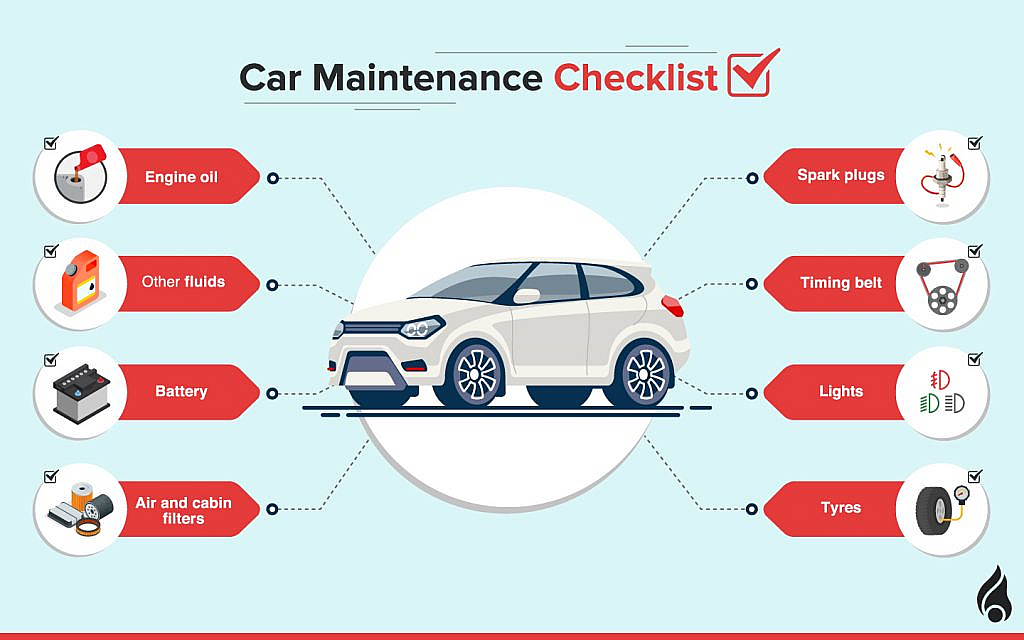
Improving fuel efficiency naturally starts with maintenance most owners already have access to, but tend to neglect. Correctly inflated tyres reduce rolling resistance, while under-inflation by even a few PSI measurably increases fuel consumption.
Replacing air filters and spark plugs on schedule keeps combustion efficient, and periodic fuel injector cleaning prevents the gradual efficiency drop that builds up unnoticed over months of driving.
A car with neglected tyres, a clogged air filter, and worn spark plugs can lose 10 to 15% of its original mileage over a year — a loss that happens so gradually most owners never connect it back to a specific cause.
The Tyre Pressure and Air Filter Check Most Owners Skip
Tyre pressure deserves a monthly check, not just a glance during scheduled service, since pressure loss happens gradually and is easy to miss. A clean air filter matters just as much, since it directly affects how efficiently the engine burns fuel.
Both checks take under ten minutes and cost nothing beyond the time spent, yet they’re consistently the two most commonly skipped items in routine car care.
In short: the cheapest fuel efficiency gains are maintenance items most owners already know about but rarely prioritise.
Best Tips to Increase Car Fuel Efficiency Through Driving Habits
Small driving-behaviour changes often matter more than the car itself. Smooth, gradual acceleration instead of aggressive throttle use reduces fuel burn significantly, and maintaining a steady speed roughly in the 50–80 km/h range keeps most engines running in their efficient band.
Minimising unnecessary idling and reducing AC load where practical round out the list of fuel-saving driving habits worth building into daily routine. Combined, these habits are commonly cited as delivering a 10 to 15% real-world mileage improvement without any mechanical change to the car — a bigger swing than most owners expect from behaviour alone.
In short: driving style alone can close much of the gap between ARAI-claimed mileage and disappointing real-world numbers.
Car Fuel Efficiency Tips for Indian Drivers — Traffic, Terrain and Real Conditions
Car fuel efficiency tips for Indian drivers need to account for conditions most international driving advice ignores. Stop-and-go city traffic disproportionately hurts mileage compared to open highway driving, since repeated acceleration from a standstill burns far more fuel than maintaining a steady cruising speed.
Potholed roads and frequent braking reduce efficiency further, adding wear that highway driving simply doesn’t create.
Hot climates increase AC dependency too, which pulls directly from the engine’s output and lowers mileage in ways drivers in cooler climates rarely experience. A car that returns its ARAI figure comfortably on a cool test track can fall well short of that number on a 40-degree afternoon in heavy traffic with the AC running constantly.
In short: generic fuel-saving advice often assumes ideal road conditions that don’t reflect how most Indian commutes actually happen.
How to Get Better Fuel Efficiency in Petrol and Diesel Cars
How to get better fuel efficiency in petrol and diesel cars depends partly on which fuel type is being driven. Petrol engines generally respond well to gentle driving and regular tuning, rewarding smooth acceleration with a fairly immediate efficiency benefit.
Diesel engines behave differently — they benefit particularly from consistent highway use rather than short city trips, since diesel engines are less efficient when never allowed to reach optimal operating temperature.
The Tata Altroz diesel’s ARAI-claimed 25.11 kmpl, the best figure among current diesel hatchbacks, illustrates what a well-maintained modern diesel can achieve when driven the way the engine is designed for.
In short: diesel owners doing mostly short city trips are working against the engine’s natural efficiency profile, regardless of how well the car is maintained.
Car Fuel Efficiency Guide — Comparing Fuel Types (Petrol, Diesel, CNG, Hybrid)
This car fuel efficiency guide: maintenance tips to save fuel wouldn’t be complete without comparing what each fuel type actually delivers today. The Maruti Celerio CNG leads with roughly 35 km/kg, the highest factory-fitted CNG figure in India, while the Maruti Swift returns 24.8 kmpl on petrol and 32.85 km/kg on its CNG variant.
Strong hybrids like the Maruti Grand Vitara and Toyota Urban Cruiser Hyryder both claim around 27.97 kmpl, putting them well ahead of most conventional petrol SUVs and closing much of the gap that used to exist between hybrids and dedicated CNG cars.
These mileage improvement tips only matter in context, so the table below adds a rough monthly running-cost comparison for a driver covering 1,500 km a month.
| Fuel Type | Example Model | ARAI Mileage | Approx. Monthly Cost (1,500 km) |
|---|---|---|---|
| CNG | Maruti Celerio CNG | ~35 km/kg | ~₹4,800 |
| Petrol | Maruti Swift | 24.8 kmpl | ~₹6,050 |
| Strong Hybrid | Maruti Grand Vitara / Toyota Hyryder | 27.97 kmpl | ~₹5,360 |
| Diesel | Tata Altroz | 25.11 kmpl | ~₹5,975 |
Note: recalculate the monthly cost column using current local fuel prices at time of publishing, since petrol/diesel/CNG rates vary by city and change frequently — the ₹94–104/litre petrol range and ₹80/kg CNG figure used here are broad 2026 averages, not fixed numbers.
In short: CNG remains the cheapest to run where infrastructure exists, but hybrids now close much of that gap for buyers who’d rather not deal with a CNG kit.
Tips to Maintain Long-Term Fuel Efficiency
Anyone looking to improve car mileage over the long term should treat these as habits, not one-time fixes.
- Check tyre pressure monthly rather than only at service intervals, since gradual pressure loss is easy to miss
- Stick to the manufacturer’s recommended service schedule rather than stretching intervals to save money short-term
- Avoid carrying unnecessary weight in the boot, since extra load measurably increases fuel consumption
- Use cruise control on highways where available, since it maintains a more consistent speed than manual throttle control
- Get wheel alignment and balancing checked if the car pulls to one side, since misalignment increases rolling resistance
- Track mileage manually every few fill-ups rather than relying solely on the trip computer, to catch a genuine efficiency drop early
In short: long-term fuel efficiency comes from consistent small habits rather than one big service visit before a long trip.
Frequently Asked Questions
1. What is considered good car fuel efficiency in India?
Roughly 20+ kmpl is considered good for petrol, 25+ km/kg for CNG, 18+ kmpl for diesel, and 22+ kmpl real-world is excellent for hybrids.
2. How much lower is real-world mileage compared to ARAI-claimed figures?
Real-world mileage commonly runs 15 to 25% lower than ARAI figures, since lab conditions don’t reflect actual traffic and driving style.
3. Does tyre pressure really affect fuel efficiency?
Yes. Under-inflated tyres increase rolling resistance, which directly increases fuel consumption even over short daily drives.
4. Which is more fuel-efficient — CNG, petrol, diesel, or hybrid?
It depends on usage pattern: CNG offers the lowest running cost with good infrastructure access, hybrids suit city-heavy driving, diesel suits consistent highway use, and petrol offers the lowest purchase price with decent efficiency.
5. Can driving habits alone improve fuel efficiency without any car modifications?
Yes. Smoother acceleration, steady speeds, and reduced idling are commonly associated with a 10 to 15% real-world improvement without touching the car mechanically.
Conclusion
Car fuel efficiency isn’t determined by one single factor. It comes from the combination of choosing the right fuel type for a buyer’s actual usage pattern, staying consistent with maintenance, and making genuinely achievable driving habit changes rather than chasing dramatic one-time fixes.
Anyone looking to improve car fuel efficiency should start with the free fixes — tyre pressure and driving habits — before assuming a new car is the only way to save on fuel.
For further reading, drivers can check ARAI’s official certification methodology on the ARAI website and current fuel price trends on the Petroleum Planning & Analysis Cell’s official portal. Readers comparing specific fuel-efficient models before a purchase can also check our related guide on Best Car Under 10 Lakhs in India (2026) — Complete Buyer’s Guide.